
How to Start a Profitable Mini-Importation Business from China to Nigeria
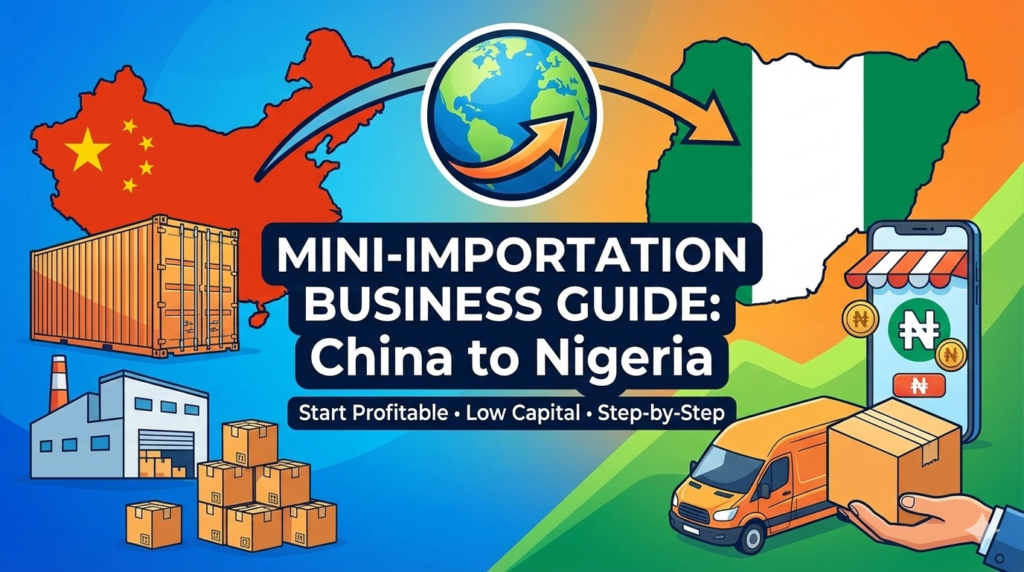
The Nigerian entrepreneurial landscape is evolving rapidly, and one business model that continues to stand out for its high return on investment is the mini-importation business. If you are looking for a lucrative side hustle or a full-time venture that requires relatively low startup capital, learning how to start a profitable mini-importation business from China to Nigeria is one of the smartest financial moves you can make today.
Gone are the days when you needed millions of Naira, massive warehouses, and clearing licenses to import goods. Today, with as little as ₦50,000 to ₦100,000, a smartphone, and a reliable internet connection, you can order hot-selling products directly from Chinese manufacturers and resell them in Nigeria for massive profits. Sometimes, these profit margins can range from 100% to as high as 500%.
In this comprehensive, step-by-step guide, we will explore everything you need to know about the mini-importation business in Nigeria, including the most profitable niches, the best platforms to buy from, reliable shipping companies, and how to effectively market your imported goods.




What is Mini-Importation?
Mini-importation is a modern e-commerce model where individuals or small businesses buy products in small quantities from overseas suppliers—primarily in China—at wholesale or factory prices, and then ship them to their home country to resell at a profit. Think of it as international trading, but simplified and digitized. You are essentially acting as the middleman between the foreign manufacturer and the local consumer, but without the massive overhead costs associated with traditional large-scale importation.
Why Import from China to Nigeria?
You might wonder, why China? Why not the USA, the UK, or Turkey? While importing from those countries is possible, China remains the undisputed global capital for mini-importers for several reasons:
- Unbeatable Factory Prices: China is the “factory of the world.” Labor and production costs are low, allowing you to buy high-quality items for pennies on the dollar.
- Massive Product Variety: Whether you want to sell hair extensions, electronics, or kitchen utensils, Chinese suppliers have an endless catalog of products.
- Small Minimum Order Quantities (MOQ): Unlike traditional importing where you must buy an entire shipping container, Chinese suppliers on mini-importation platforms allow you to buy as few as 2 to 5 pieces of a product.
- Favorable Logistics: There is a massive, well-established logistics pipeline between China and Nigeria, making it easier and faster than ever to ship goods directly to Lagos, Abuja, Port Harcourt, or any other state.
Basic Requirements to Start a Mini-Importation Business
Starting this business does not require a university degree or an office space. Here are the basic tools you need to kickstart your journey:
- A Smartphone or Personal Computer: For browsing supplier websites, communicating with sellers, and marketing your products.
- Reliable Internet Connection: To ensure smooth communication and transaction processing.
- Startup Capital: You can start with as little as ₦50,000. However, having between ₦100,000 and ₦200,000 gives you better purchasing power and covers shipping/marketing costs comfortably.
- A Valid Delivery Address: Where your logistics company will deliver your goods upon arrival in Nigeria.
- An Active Email Address & Phone Number: For registering on e-commerce platforms and communicating with procurement agents.
Top Profitable Niches for Mini-Importation in Nigeria
The golden rule of mini-importation is simple: Never import what you like; import what people want to buy. To succeed, you must focus on products that solve a specific problem or cater to an undeniable passion. Here are the most profitable product niches to focus on right now:
1. Smartphone Accessories and Gadgets
Nigeria boasts over 160 million active mobile lines. Phone accessories like fast-charging power banks, wireless Bluetooth earbuds, smartwatches, ring lights, and durable phone cases are always in high demand. These items are lightweight (which makes shipping very cheap) and have a very fast turnover rate.
2. Solar and Alternative Power Solutions
Given the frequent power outages and the rising cost of electricity and fuel in Nigeria, alternative power solutions are selling out rapidly. Items like rechargeable solar lamps, mini solar generators, rechargeable fans, and portable inverters are highly sought after by households and small businesses.
3. Health, Beauty, and Skincare
The beauty industry is a multi-billion Naira market. Fast-selling products in this niche include laser teeth whitening kits, acne removers, anti-aging serums, waist trainers, hair growth oils, and high-quality human hair wigs or synthetic blends. Women (and increasingly men) are always willing to spend money on looking good.
4. Fashion and Wearables
Fashion is an evergreen niche. You can import unique fashion accessories such as polarized sunglasses, designer replica bags, men’s belts, sneakers, and corporate wear. The trick is to find trendy, eye-catching items that are not easily found in local Nigerian markets.
5. Smart Home and Kitchen Appliances
Convenience is a major selling point. Portable blenders, automatic soap dispensers, vegetable choppers, mini washing machines, and air fryers are incredibly popular, especially among working-class individuals and modern homemakers.
Best Platforms for Sourcing Products from China
Knowing where to buy is just as important as knowing what to buy. Here are the top platforms used by successful mini-importers in Nigeria:
1. 1688.com
This is arguably the holy grail of mini-importation. 1688 is a platform built specifically for the domestic Chinese market, meaning the prices here are true factory wholesale prices—much cheaper than anywhere else. The only catch is that the website is in Mandarin (Chinese) and suppliers only accept RMB (Chinese currency). To use 1688, you will use the Google Chrome browser to translate the page to English, and you will likely need a procurement agent to help you pay the suppliers.
2. AliExpress
AliExpress is Alibaba’s retail sister company, designed for international buyers. The website is in English, and you can pay directly with your Nigerian debit card (provided it allows international transactions) or virtual dollar cards. While the prices are slightly higher than 1688, it is the easiest platform for beginners who want to buy 1 or 2 items to test the market.
3. Alibaba
Alibaba is the giant of B2B (Business-to-Business) e-commerce. It is best suited for importers who have grown their business and want to buy in larger bulk quantities or want to manufacture custom products with their own brand name (White Labeling). Alibaba is highly secure due to its “Trade Assurance” policy.
4. DHgate and Banggood
If you are strictly interested in electronics, gadgets, and tech accessories, these platforms offer great deals and buyer protection, though they operate similarly to AliExpress.
Step-by-Step Guide to Starting Your Mini-Importation Business
Now that you have the background knowledge, here is the exact blueprint to execute your mini-importation business from start to finish:
Step 1: Conduct Product Research
Do not guess what will sell. Go on platforms like Jumia, Konga, Instagram, or Facebook and observe the products that have high engagement (likes, comments, and reviews). Use tools like Google Trends to see what Nigerians are currently searching for.
Step 2: Source the Product and Verify the Supplier
Head over to 1688 or AliExpress to search for the product. Before buying, check the supplier’s ratings. On 1688, look for suppliers with a “Bull’s Head” icon (which indicates they are verified powerful merchants) and check their transaction volume and customer reviews. Avoid suppliers with less than a 3-star rating or zero previous sales.
Step 3: Calculate the Landed Cost
Your landed cost is the total amount it takes to get the product to your doorstep. This includes the cost of the product, the procurement agent’s fee, international shipping fees, and local delivery in Nigeria. Make sure that your intended selling price can cover this landed cost and still leave you with a healthy profit margin.
Step 4: Use a Procurement Agent (If Buying from 1688)
Because you cannot pay Chinese suppliers on 1688 with Naira, you need an agent. You simply copy the product links from 1688 and send them to a trusted Nigerian procurement agent. You pay the agent in Naira, and they use their Chinese Alipay or WeChat accounts to pay the supplier in RMB on your behalf.
Step 5: Ship Your Goods to Nigeria
The supplier will send your goods to your shipping company’s warehouse in China (usually in Guangzhou or Yiwu). The shipping company will then transport the goods to Nigeria. You have two options here:
- Air Freight: Fast delivery (usually 5 to 10 days) but more expensive. It is calculated per kilogram (kg). Best for lightweight items like phones, jewelry, and cosmetics.
- Sea Freight: Slow delivery (usually 4 to 8 weeks) but significantly cheaper. Best for heavy, bulky items like furniture, large appliances, or bulk clothing.
Reliable Shipping and Logistics Companies (China to Nigeria)
Choosing the right logistics partner is critical to avoiding lost goods and frustrating delays. Here are some of the most trusted shipping companies currently used by Nigerian importers:
- Cargonaija: Highly rated for transparent rates, excellent customer service, and fast air freight delivery (usually 5-10 days).
- GIG Logistics: A household name in Nigeria, they offer a personal shopper service (KIM) and a reliable mobile app for real-time tracking from China to your doorstep.
- Chrisvicmall: A highly popular option that doubles as both a procurement agent and a shipping company, making the process seamless for beginners.
- Mimi Logistics: Known for competitive RMB exchange rates and reliable air and sea cargo services.
How to Market and Sell Your Imported Goods in Nigeria
Having the best products means nothing if nobody knows you have them. Marketing is the lifeblood of your mini-importation business. Here are proven ways to sell out your stock fast:
1. Social Media Advertising (Facebook and Instagram Ads)
This is the most effective way to sell. By running targeted sponsored ads on Facebook and Instagram, you can show your products specifically to people who are interested in them and have the purchasing power. Create high-quality videos demonstrating how the product works; video ads convert much higher than picture ads.
2. E-commerce Marketplaces
Register as a vendor on established platforms like Jumia and Konga. These platforms already have millions of daily visitors. You simply list your products, and when an order is placed, you drop it off at their hub.
3. WhatsApp Marketing
Do not underestimate the power of your contact list. Post clear pictures and engaging descriptions of your products on your WhatsApp Status. You can also create a WhatsApp Business Catalog and run Facebook ads that direct customers straight to your WhatsApp DMs.
4. Single-Page Sales Funnels
Build a simple landing page using WordPress, Carrd, or System.io. A dedicated sales page that highlights the benefits, features, and customer testimonials of a single hot product can dramatically increase your conversion rates.
Pro Tips for Success and Avoiding Scams
- Start Small: Never use your entire capital on your first importation. Order samples or small batches (e.g., 10 to 20 pieces) to test product quality and market demand before scaling up.
- Beware of “Too Good to Be True” Prices: If a supplier is offering a premium product at a ridiculously cheap price compared to others, it is likely a counterfeit, a scam, or a highly defective batch.
- Offer Payment on Delivery (PoD) with Caution: While PoD builds massive trust with Nigerian buyers, it comes with high risks of rejected orders. To mitigate this, enforce a small commitment fee (e.g., ₦2,000 for delivery) before dispatching the goods to ensure the buyer is serious.
- Reinvest Your Profits: Do not spend your initial profits on liabilities. Reinvest the money to buy larger quantities, which lowers your shipping cost per item and increases your overall profit margins.
Conclusion
Starting a profitable mini-importation business from China to Nigeria is highly achievable and remains one of the best pathways to financial independence in 2026. By choosing the right niche, leveraging platforms like 1688 for unbeatable factory prices, partnering with reliable logistics companies, and mastering social media marketing, you can build a sustainable e-commerce empire right from your bedroom.
Take the leap today, start with the capital you have, conduct thorough research, and watch your small investment grow into a massive, profitable trading business.