
How to Use GPS Tracking and Logistics Software to Automate Your Shipping Business

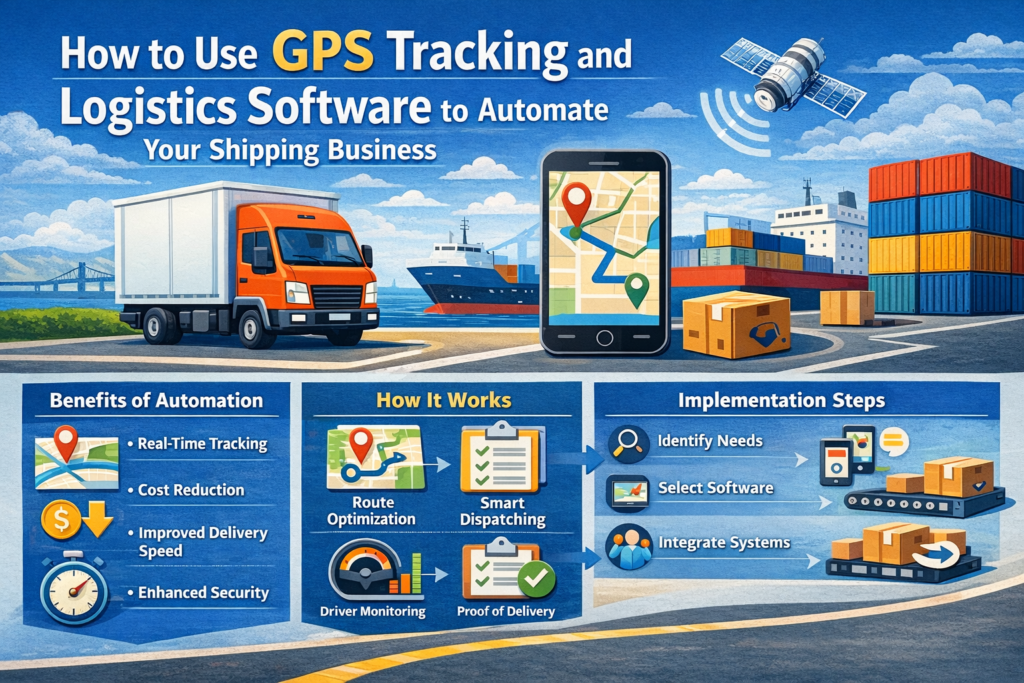
How to Use GPS Tracking and Logistics Software to Automate Your Shipping Business
In today’s fast-paced digital economy, shipping businesses must embrace automation to remain competitive, reduce operational costs, and improve customer satisfaction. Whether you operate a courier service, eCommerce delivery brand, freight company, or local dispatch business, integrating GPS tracking and logistics software can transform how you manage deliveries, monitor drivers, and streamline operations.
Automation not only improves efficiency but also helps eliminate manual errors, enhances real-time decision-making, and provides valuable insights into fleet performance. With increasing customer expectations for faster and more transparent deliveries, businesses that fail to adopt smart logistics technology risk falling behind.
This comprehensive guide explains how GPS tracking and logistics software can automate your shipping business, the benefits involved, practical implementation steps, and best practices to maximize results.




What is GPS Tracking in Shipping?
GPS tracking refers to the use of satellite-based technology to monitor the real-time location of vehicles, packages, and drivers. In shipping operations, GPS devices installed in delivery vehicles transmit location data to centralized logistics software, allowing business owners to monitor movement, routes, and delivery status.
GPS tracking provides:
- Real-time vehicle monitoring
- Accurate delivery timelines
- Route optimization insights
- Driver behavior analysis
- Theft prevention and cargo security
When combined with logistics automation software, GPS tracking becomes a powerful tool for managing operations without constant manual supervision.
What is Logistics Software?
Logistics software is a digital system designed to manage shipping processes, including order processing, dispatching, fleet management, route planning, warehouse coordination, and customer notifications.
Advanced logistics platforms often include:
- Automated dispatch and scheduling
- Route planning and optimization
- Inventory and shipment tracking
- Proof of delivery documentation
- Customer communication tools
- Analytics and reporting dashboards
When integrated with GPS tracking, logistics software enables complete end-to-end automation of your shipping business.
Benefits of Automating Your Shipping Business
1. Improved Delivery Efficiency
Automation eliminates manual dispatch processes, allowing software to assign deliveries based on driver availability, proximity, and route efficiency. This reduces delays and improves delivery speed.
2. Real-Time Shipment Visibility
Customers and business owners can track shipments in real time, improving transparency and reducing customer service inquiries.
3. Reduced Operational Costs
Optimized routes reduce fuel consumption, prevent unnecessary mileage, and improve vehicle maintenance planning.
4. Enhanced Customer Satisfaction
Automated notifications, accurate delivery estimates, and real-time tracking improve customer trust and loyalty.
5. Better Fleet Management
GPS insights help monitor driver performance, reduce unauthorized trips, and improve overall fleet productivity.
6. Increased Security
Live tracking minimizes theft risks and enables quick response if vehicles deviate from assigned routes.
How GPS Tracking Automates Shipping Operations
Automated Route Optimization
GPS-enabled logistics systems automatically calculate the most efficient routes by considering traffic conditions, delivery priorities, and vehicle capacity. This reduces travel time and fuel costs.
Smart Dispatching
Instead of manually assigning deliveries, automation software distributes orders to drivers based on location, workload, and estimated delivery times.
Real-Time Delivery Updates
Customers receive automated notifications when packages are dispatched, in transit, or delivered, improving communication without manual follow-ups.
Driver Performance Monitoring
GPS tracking helps monitor speeding, harsh braking, idle time, and route deviations, enabling businesses to improve driver accountability.
Proof of Delivery Automation
Digital signatures, photos, and timestamps automatically record successful deliveries, reducing disputes and paperwork.
Steps to Implement GPS Tracking and Logistics Software
Step 1: Identify Your Business Needs
Determine your primary challenges, such as delayed deliveries, poor fleet visibility, inefficient dispatching, or customer complaints. Understanding your pain points helps you choose the right automation tools.
Step 2: Choose the Right GPS Tracking System
Look for GPS solutions that offer:
- Real-time tracking accuracy
- Mobile app accessibility
- Geofencing capabilities
- Driver behavior monitoring
- Integration with logistics platforms
Step 3: Select Logistics Management Software
Your logistics software should support:
- Automated dispatch
- Route optimization
- Order tracking
- Customer notification systems
- Reporting and analytics
Step 4: Integrate GPS with Logistics Software
Integration allows location data to automatically trigger delivery updates, route adjustments, and performance reports.
Step 5: Train Your Team
Drivers, dispatch managers, and customer service staff must understand how to use the system effectively to maximize automation benefits.
Step 6: Monitor and Optimize
Use analytics dashboards to identify inefficiencies and continuously improve delivery performance.
Key Features to Look for in Automation Software
- Real-time fleet tracking
- Automated dispatching
- Smart route optimization
- Customer tracking portals
- Mobile driver applications
- Delivery analytics and reporting
- Geofencing alerts
- Inventory synchronization
Best Practices for Successful Shipping Automation
Start Small and Scale Gradually
Begin with core automation features such as GPS tracking and automated dispatch, then expand into analytics and AI-driven optimization.
Prioritize User-Friendly Software
Complex systems can slow adoption. Choose intuitive platforms that drivers and managers can easily understand.
Maintain Data Accuracy
Ensure vehicle information, delivery addresses, and driver details are updated regularly to avoid automation errors.
Use Data for Decision Making
Analytics insights help identify peak delivery times, inefficient routes, and driver productivity trends.
Enhance Customer Communication
Automated SMS and email updates significantly improve customer experience and reduce support workload.
Common Challenges and How to Overcome Them
Resistance to Technology Adoption
Provide training and demonstrate how automation simplifies tasks rather than replacing employees.
Initial Setup Costs
Although automation requires investment, long-term savings from improved efficiency and reduced losses justify the expense.
Connectivity Issues
Choose GPS systems that store data offline and sync automatically when connectivity is restored.
Data Security Concerns
Use secure logistics platforms with encryption and role-based access controls.
How Automation Improves eCommerce Shipping
For eCommerce businesses, GPS and logistics automation enable:
- Faster last-mile delivery
- Real-time customer tracking links
- Automated order dispatch
- Reduced delivery failures
- Improved returns management
Automation is particularly valuable for growing online stores handling large daily order volumes.
The Future of Automated Shipping
The logistics industry is rapidly evolving with technologies such as artificial intelligence, predictive analytics, IoT sensors, and autonomous delivery solutions. Businesses that adopt GPS tracking and automation today position themselves for future innovations and scalability.
Emerging trends include:
- AI-powered demand forecasting
- Predictive vehicle maintenance
- Drone and robotic delivery integration
- Smart warehouse automation
- Advanced customer delivery experience platforms
Conclusion
Automating your shipping business using GPS tracking and logistics software is no longer optional — it is a necessity for efficiency, scalability, and customer satisfaction. From real-time fleet visibility and automated dispatching to route optimization and performance analytics, automation empowers businesses to operate smarter and grow faster.
By carefully selecting the right tools, integrating systems effectively, and continuously optimizing operations, shipping companies can reduce costs, improve delivery reliability, and create a seamless experience for customers.
Whether you run a small delivery startup or a large logistics enterprise, embracing automation today will give your shipping business a strong competitive advantage in the evolving logistics landscape.