
Dangote Petrol Price in Nigeria: Latest Updates, Breakdown
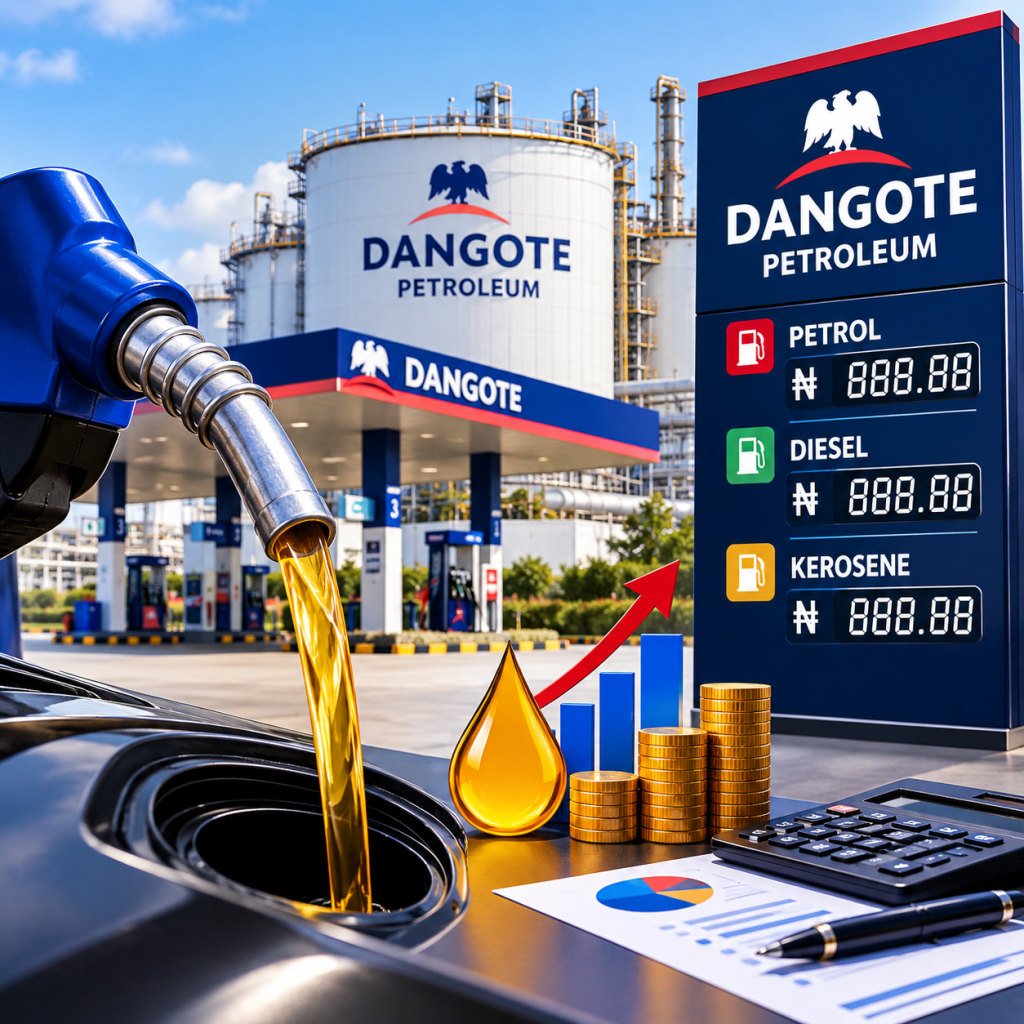
For decades, Nigeria has found itself in a rather ironic economic situation. As one of the largest producers of crude oil in the world, the nation paradoxically depended almost entirely on imported refined petroleum products. This reliance drained the country’s foreign exchange reserves, birthed a controversial subsidy regime, and left citizens at the mercy of global market shocks. However, the narrative took a monumental turn with the commencement of operations at the Dangote Petroleum Refinery. Today, the most talked-about subject in boardrooms, public transport, and households across the nation is the Dangote petrol price.
If you are a business owner, a daily commuter, or an investor keeping tabs on the Nigerian economy, understanding the dynamics of the Dangote petrol price is absolutely crucial. The rollout of Premium Motor Spirit (PMS) from the $20 billion, 650,000 barrels-per-day facility located in the Lekki Free Zone was expected to bring immediate relief to Nigerians. Yet, the realities of free-market economics, international crude oil benchmarks, and the removal of government subsidies have created a complex pricing structure that many are still trying to navigate.
In this comprehensive, SEO-friendly guide, we will break down everything you need to know about the current Dangote petrol price. We will explore the latest gantry and retail prices, the reasons behind the pricing template, the role of the Nigerian National Petroleum Company Limited (NNPCL), state-by-state price variations, and what the future holds for fuel prices in Nigeria. Whether you are looking for investment insights or just trying to budget for your monthly fuel expenses, this article is designed to provide you with a deep, human-centric, and highly detailed perspective.




The Dawn of a New Era: Dangote Refinery’s Impact on Nigeria’s Oil Sector
To fully appreciate the current conversations surrounding the Dangote petrol price, we must first travel back in time and understand the historical context of Nigeria’s downstream petroleum sector. Historically, Nigeria exported its crude oil to foreign refineries and bought back the refined products—a highly inefficient cycle that cost the nation trillions of naira in freight, insurance, and subsidy payments. The four government-owned refineries in Port Harcourt, Warri, and Kaduna have been largely non-functional for years, despite billions of dollars pumped into Turn Around Maintenance (TAM).
Enter Aliko Dangote. The vision to build the world’s largest single-train refinery was born out of the necessity to industrialize Nigeria and Africa at large. The Dangote Refinery, which boasts a capacity of 650,000 barrels per day, was designed to not only meet Nigeria’s entire domestic demand for refined products—estimated at around 30 to 35 million liters per day for petrol—but also to produce a surplus for export to other African countries and beyond.
The End of the Importation Era
The operationalization of the Dangote Refinery effectively ends Nigeria’s total dependence on imported petrol. This shift is monumental for several reasons. First, it eliminates the associated costs of importing fuel, such as the logistics of shipping refined products from Europe or Asia back to West Africa. Second, it reduces the pressure on the Nigerian Naira, as marketers no longer need to source hundreds of millions of dollars monthly to pay for imported cargoes.
However, while the refinery removes the importation bottlenecks, it operates as a fully commercial, profit-driven entity. It purchases crude oil at international market rates, processes it, and sells the refined products at prices that guarantee a return on its massive investment. This brings us directly to the crux of the matter: why the local production of petrol has not translated to the extremely cheap pump prices that many Nigerians initially anticipated.
Current Dangote Petrol Price Per Litre: What You Need to Know
As of late September 2026, the pricing dynamics of petrol from the Dangote Refinery have seen significant fluctuations, reflecting the realities of the global energy market and local economic policies. To understand the current price, we must differentiate between two major pricing terms: the gantry price (also known as the ex-depot price) and the retail pump price.
Understanding the Gantry Price
The gantry price is the wholesale price at which petroleum marketers purchase fuel directly from the Dangote Refinery before adding their own transportation and operational margins. In mid-September 2026, the Dangote Refinery adjusted its gantry price for petrol upward to ₦1,350 per litre. This marked a noticeable increase from the previous rate of ₦1,265, translating to an ₦85 per litre jump in a matter of weeks.
This upward adjustment was not arbitrary. It was a direct response to the rising cost of crude oil on the international market, with Brent crude peaking around $107 per barrel due to geopolitical tensions in the Middle East, particularly around the Strait of Hormuz. Because Dangote Refinery buys its crude at global benchmark prices (even if sourced locally from Nigeria in a Naira-for-crude arrangement, the valuation is still tied to international rates), any spike in global crude prices naturally pushes up the cost of production.
The Shift to Lower Prices
Interestingly, the petroleum market is highly dynamic. By the final week of September 2026, the international crude oil market experienced a slight cooling off. Responding to this, the Dangote Refinery and other petroleum marketers initiated price cuts. The gantry prices saw a downward review to around ₦1,325 per litre.
This reduction quickly triggered a ripple effect at the retail level. Major fuel retailers associated with the distribution of products from the refinery, such as MRS Oil, promptly slashed their pump prices. For instance, MRS filling stations in Abuja reduced their retail petrol price from ₦1,395 to ₦1,370 per litre. While a ₦25 drop might seem modest on paper, it provides a tangible sigh of relief for motorists and transport operators who buy fuel in large quantities. A motorist purchasing 50 litres of petrol at this new rate instantly saves ₦1,250 on a single fill-up.
Why is the Dangote Petrol Price Not as Cheap as Expected?
When news of the Dangote Refinery first broke years ago, a common sentiment echoed across Nigerian streets: “Once Dangote starts refining, fuel will become cheap.” Many optimists threw around figures like ₦300 or ₦500 per litre. Yet, the current reality of petrol trading between ₦1,300 and ₦1,450 per litre has left many disillusioned. To bridge this gap between expectation and reality, we must unpack the economic architecture of fuel pricing.
1. The Reality of Crude Oil Costs
The biggest misconception among the public is that because Nigeria produces crude oil, a local refinery gets it for free or at a highly subsidized rate. This is factually incorrect. Crude oil is a globally traded commodity. Even under the Federal Government’s commendable “Naira-for-Crude” policy—where NNPC supplies crude to Dangote and gets paid in Naira—the transaction is still pegged to the prevailing international price of Brent crude.
If Brent crude is selling at $107 per barrel, the Dangote Refinery must pay the Naira equivalent of $107 for every barrel it refines. Consequently, the cost of the raw material constitutes the largest chunk of the final petrol price. As long as global oil prices remain high, the baseline cost of refining petrol will also remain high, regardless of where the refinery is geographically located.
2. The Foreign Exchange (Forex) Factor
The floating of the Naira by the Central Bank of Nigeria (CBN) has fundamentally altered the cost structure of every business operating in the country, and the energy sector is no exception. While the Naira-for-Crude deal helps circumvent the need to physically hunt for dollars, the valuation of the crude is heavily influenced by the exchange rate. A weaker Naira means the domestic cost of crude oil—and subsequently the refined petrol—will be higher. If the Naira were to gain significant strength against the US Dollar, we would naturally see a corresponding drop in the Dangote petrol price.
3. Deregulation and the End of Subsidies
For decades, Nigerians did not pay the actual market price for petrol. The Federal Government absorbed the difference between the true cost of fuel and the pump price through a controversial subsidy program. This program was notorious for corruption, smuggling, and draining national resources. In May 2023, the government officially announced the removal of the petrol subsidy.
Today, the market is fully deregulated. The Nigerian Midstream and Downstream Petroleum Regulatory Authority (NMDPRA) has made it explicitly clear that it no longer fixes pump prices. Citing Section 205(1) of the Petroleum Industry Act (PIA), the NMDPRA insists that petrol prices must be determined by unrestricted free-market conditions. Therefore, the current Dangote petrol price is the true, unsubsidized, and actual market cost of producing and distributing fuel in Nigeria today.
4. Capital Recovery and Operational Costs
We must also remember that the Dangote Refinery is a monumental business venture built with a mix of equity and heavily syndicated loans from local and international financial institutions. The refinery has its own operational costs, including power generation, maintenance, staffing, and debt servicing. The pricing template naturally incorporates margins designed to ensure the financial viability and long-term sustainability of the facility.
A State-by-State Breakdown: How Much is Dangote Petrol Selling Across Nigeria?
One of the most defining characteristics of the deregulated petroleum market in Nigeria is the death of uniform national pricing. In the subsidy era, the government spent billions on the Petroleum Equalisation Fund (PEF) to ensure that a litre of petrol in Lagos cost the exact same amount as a litre in Maiduguri or Gombe. With deregulation, the cost of logistics is now fully borne by the consumer.
Because the Dangote Refinery is located in the Ibeju-Lekki area of Lagos State, the baseline prices are naturally cheapest within Lagos and its immediate environs. As tanker trucks transport the fuel farther into the hinterlands, the prices increase progressively.
Lagos and the South-West
In Lagos, where the proximity to the refinery significantly cuts down haulage costs, retail prices are generally the lowest in the country. Motorists in Lagos typically purchase petrol at prices ranging from ₦1,300 to ₦1,350 per litre. Independent marketers and major outlets can easily load their trucks at the Dangote gantry and have them discharging at filling stations on the mainland or island within hours.
Abuja and the North-Central
Transporting highly flammable petroleum products over hundreds of kilometers from Lagos to the Federal Capital Territory (FCT) involves substantial logistics costs. Truck maintenance, diesel to power the haulage trucks (which costs over ₦1,700 per litre), and road taxes all add up. In Abuja, the retail price of petrol fluctuates between ₦1,370 and ₦1,450 per litre. As noted earlier, the recent decision by MRS to drop their price to ₦1,370 in Abuja is a testament to the fact that competition is beginning to force marketers to sacrifice a portion of their profit margins to attract customers.
The South-East and South-South
Despite being the region that produces the bulk of the crude oil, states in the South-East and South-South still rely on trucks bringing in refined products from Lagos. Prices in cities like Port Harcourt, Enugu, and Owerri generally hover between ₦1,380 and ₦1,430 per litre. The terrain and the state of the road infrastructure play huge roles in determining the final landing cost of petrol in these areas.
The Deep North: Kano, Borno, and Gombe
For locations in the far north such as Kano, Maiduguri, and Tempure in Gombe State, the logistical challenge is massive. Hauling a 45,000-litre tanker from Lekki to Gombe takes days. Consequently, these regions experience the highest pump prices in the country. It is not uncommon to see petrol selling for ₦1,450 or even slightly above ₦1,500 in very remote northern local governments. The cost of diesel used by the trucks, combined with the security risks associated with long-distance travel, are fully factored into the final pump price.
The Role of NNPC and Deregulation
To fully grasp the architecture of the Dangote petrol price, we must examine the evolving role of the Nigerian National Petroleum Company Limited (NNPCL). For a brief period following the commencement of petrol production at the Dangote Refinery, the NNPC acted as the sole off-taker. This meant that Dangote sold exclusively to NNPC, who then dictated the price and sold to independent marketers.
However, this arrangement was short-lived. In a bid to promote a truly competitive market, NNPC terminated its exclusive purchase agreement with the Dangote Refinery. This policy shift was a masterstroke for free-market advocates. It effectively opened the doors for independent petroleum marketers, major oil marketers, and depot owners to negotiate directly with the Dangote Refinery.
The Willing-Buyer, Willing-Seller Framework
Today, the Nigerian downstream sector operates on a willing-buyer, willing-seller basis. This means the Dangote Refinery acts as a private merchant. If an independent marketer in Kano wants 10 trucks of petrol, they negotiate the bulk gantry price directly with Dangote. Once the purchase is made, the marketer factors in their transport costs, administrative expenses, and desired profit margin to arrive at their filling station’s pump price.
This fierce competition is the consumer’s best friend. As wholesale prices from the refinery drop—as seen in the recent cuts triggered by falling international crude prices—marketers are forced to adjust their retail prices downwards or risk losing patronage to cheaper neighboring stations. We are currently witnessing an era where motorists actively shop around for the most affordable filling station, an anomaly just a few years ago.
How Marketers Determine the Final Pump Price
For those who wonder how a ₦1,325 gantry price magically transforms into a ₦1,400 retail pump price, the math is straightforward but deeply reflective of Nigeria’s infrastructural deficits. The journey from the refinery to the petrol pump involves several layers of expenses.
- Ex-Depot / Gantry Cost: This is the baseline amount paid to the Dangote Refinery. It is the core cost of the refined product itself.
- Transportation and Haulage: The logistics of moving fuel. Since the pipelines across Nigeria are largely non-functional due to years of vandalism and neglect, over 90% of fuel distribution is done by road. Haulage rates are exorbitant because the trucks run on diesel, which is expensive and fully deregulated.
- Station Operating Costs: Filling stations in Nigeria do not run on a stable national grid. They rely heavily on diesel generators to power their fuel pumps, light up their premises, and run their administrative offices. These overhead costs are baked into the per-litre price of petrol.
- Union and Regulatory Levies: Various dues paid to unions like the Petroleum Tanker Drivers (PTD), National Union of Road Transport Workers (NURTW), and mandatory regulatory fees charged by the NMDPRA.
- Profit Margin: After all costs are accounted for, the marketer adds a margin. In a deregulated market, this margin is not fixed, which is why prices vary not just from state to state, but even from street to street within the same city.
Economic Implications: What the Dangote Fuel Price Means for Everyday Nigerians
The cost of petrol in Nigeria is not just an energy issue; it is the ultimate determinant of macro and microeconomic survival. The price of PMS serves as an inflationary anchor. When fuel prices go up, the cost of transportation surges, which directly cascades into the cost of food, healthcare, schooling, and general services.
Impact on Small and Medium Enterprises (SMEs)
Nigeria’s economy is heavily driven by the informal sector and SMEs. Tailors, barbers, frozen food vendors, and tech startups all rely on alternative power generation—mostly petrol-powered generators—to run their businesses. With the Dangote petrol price floating above ₦1,300 per litre, the cost of doing business has escalated significantly. Business owners have had to pass these costs onto consumers, driving up inflation. However, the localized availability of fuel means that businesses no longer have to suffer through weeks of crippling fuel scarcity that used to characterize the importation era. The product is expensive, but it is available.
Transportation and Food Security
The cost of commuting has doubled, and in some cases tripled, across the nation since the subsidy removal and subsequent price adjustments. A bus ride from the mainland to the island in Lagos, which used to cost ₦500, now hovers around ₦1,500. This places immense pressure on the disposable income of the average Nigerian wage earner.
Interestingly, however, there are glimpses of market stabilization. Recent reports indicate that despite the high fuel prices, the cost of staple foods like rice has begun to drop, with a 50kg bag seeing a reduction of up to ₦15,000 in some markets. This suggests that the local agricultural supply chains are slowly adapting to the new economic realities, and the uninterrupted supply of fuel from the Dangote Refinery is facilitating smoother interstate haulage of agricultural produce.
Macroeconomic Benefits to Nigeria
While the pain at the pump is intensely felt by the citizenry, from a macroeconomic perspective, the Dangote Refinery is a massive win for the Nigerian state. By refining products locally, Nigeria has significantly reduced its demand for foreign exchange to import refined petroleum. This eases the pressure on the Naira.
Furthermore, Aliko Dangote has confidently stated that Africa will not need imported fuel by 2030. As the refinery scales up its output, it will begin aggressive exports to neighboring West African countries, turning Nigeria from a net importer of refined products to a net exporter. This shift will generate billions of dollars in foreign exchange revenue, potentially strengthening the Naira and, paradoxically, lowering domestic fuel prices in the long run.
The Future of Petrol Pricing in Nigeria: Will the Price Go Down?
The million-dollar question on the lips of every Nigerian is: “Will the Dangote petrol price ever come down to the ₦500 or ₦600 level?” To provide a truthful answer, we must abandon wishful thinking and look strictly at market fundamentals.
Under a deregulated regime, fuel prices will permanently fluctuate. The era of static fuel prices that stay the same for five years is gone forever. If you want to predict the pump price of fuel in Nigeria next month, keep an eye on two critical indicators: the price of crude oil in the international market, and the Naira-to-Dollar exchange rate.
If global geopolitical tensions ease and Brent crude drops from $107 to say, $75 a barrel, the Dangote Refinery’s production costs will plummet. Because there is now fierce competition among marketers, this reduction will be swiftly passed down to the consumer, leading to a significant drop in pump prices. We already saw a preview of this when prices dropped from ₦1,350 to ₦1,325 following a slight dip in global crude prices.
Similarly, if the Central Bank of Nigeria’s monetary policies succeed in appreciating the Naira—for instance, strengthening it from current parallel rates to around ₦900 to the dollar—the domestic valuation of the crude oil bought by Dangote will drop. This would massively crash the retail price of petrol.
Additionally, as the Dangote Refinery reaches its peak operational efficiency, economies of scale will kick in. Optimization in refining processes often leads to lower overheads, which can translate into more competitive pricing. Furthermore, there are ongoing discussions regarding potential government interventions not through direct subsidies, but by equalizing transportation costs nationwide or subsidizing the logistics sector (like providing CNG buses) to cushion the effect on the masses.
Frequently Asked Questions (FAQs) About Dangote Petrol Price
To ensure this guide leaves no stone unturned, here are detailed answers to some of the most frequently asked questions regarding the Dangote Refinery and its pricing structures.
1. Why is Dangote fuel more expensive than we thought it would be?
Many expected Dangote fuel to be extremely cheap because it is refined in Nigeria. However, the refinery still has to purchase crude oil at international market prices. The cost of crude oil accounts for about 80% of the final price of petrol. Coupled with the devaluation of the Naira and the removal of government subsidies, the price reflects the true, unsubsidized cost of petrol globally.
2. Does NNPC still determine the price of fuel?
No, the NNPC no longer dictates fuel prices. The Nigerian petroleum sector is fully deregulated under the Petroleum Industry Act (PIA). Prices are now determined by free-market forces (supply and demand), international crude oil prices, and logistics costs. NNPC simply acts as a competitor in the retail space alongside other independent marketers.
3. Why is fuel cheaper in Lagos than in Northern states like Gombe or Kano?
Because the market is deregulated, the cost of transporting fuel from the Dangote Refinery in Lagos to other parts of the country is added to the final pump price. The farther a state is from Lagos, the more diesel the tanker uses to transport the fuel, leading to higher retail prices in regions like the North-East and North-West.
4. Will the price of Dangote petrol fluctuate like the price of diesel?
Yes, absolutely. Now that petrol is fully deregulated just like diesel and aviation fuel, its price will rise and fall continuously based on international crude oil prices and the prevailing foreign exchange rates. When crude oil becomes cheap globally, petrol prices will drop in Nigeria, and vice versa.
5. How does the Dangote Refinery benefit Nigeria if the fuel is still expensive?
The refinery benefits the country by ending the reliance on imported refined products, which guarantees product availability and eliminates long queues at filling stations. It also saves the country billions of dollars in foreign exchange previously used for importation, creates massive local employment, and positions Nigeria as a hub for refined products export in Africa.
Conclusion
The narrative surrounding the Dangote petrol price is a perfect reflection of Nigeria’s painful but necessary transition from a subsidized, import-dependent economy to a deregulated, production-focused powerhouse. The days of artificially cheap fuel are behind us. What we have now is a transparent, market-driven pricing system that, while momentarily painful for the average citizen, establishes a foundation for true economic sustainability.
Aliko Dangote’s mega-refinery has achieved the unthinkable by breaking the jinx of local refining in Nigeria. As the market matures, as independent marketers compete aggressively for customers, and as macroeconomic variables like crude prices and exchange rates stabilize, Nigerians can expect more dynamic and competitive pricing at the pumps. The recent price cuts by stations like MRS are early indicators that the free market is working and that localized refining will eventually bring stability to the volatile energy sector.
The journey to energy independence is not a sprint; it is a marathon. By staying informed on the nuances of gantry prices, logistics costs, and international oil benchmarks, consumers and businesses can better plan and navigate the economic terrain of this new era.
Ready to stay updated directly from the source or explore business opportunities with the refinery?
Access the Official Dangote Refinery Portal Here