
Kukah Centre Opens Applications for Election Security Risk Observers for 2027 Election

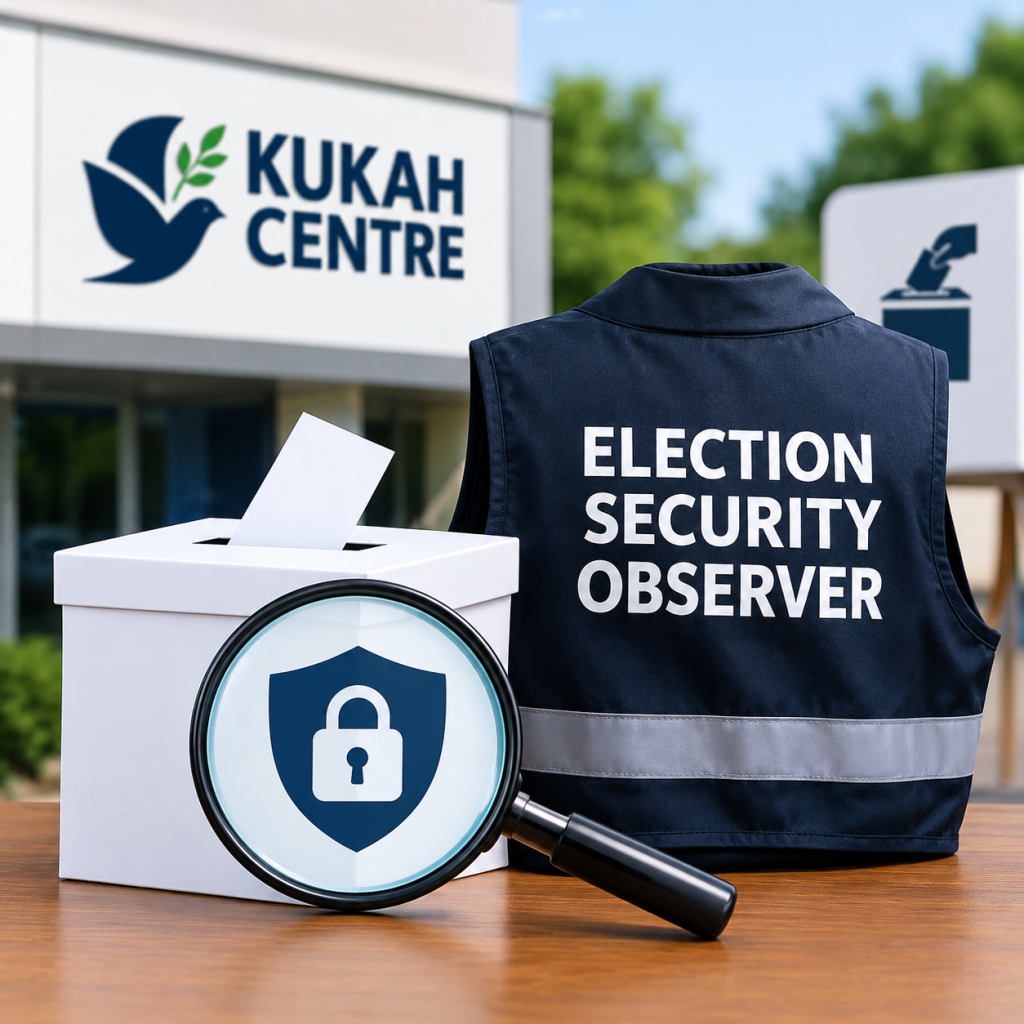
Kukah Centre Opens Applications for Election Security Risk Observers
As Nigeria steadily approaches another defining moment in its democratic journey, the conversation surrounding peaceful, credible, and transparent elections has never been more vital. Elections are universally recognized as the bedrock of any thriving democracy, but they can only truly reflect the will of the people when they are conducted in a secure, intimidation-free environment. Recognizing the urgent need for proactive peacebuilding and localized conflict monitoring, the Kukah Centre for Faith and Leadership Research has officially announced that it is now accepting applications for the highly critical position of Election Security Risk Observers (ESROs).
If you are a professional passionate about governance, conflict resolution, peacebuilding, and democratic stability, this represents a unique and golden opportunity to play an active, on-the-ground role in shaping the future of the nation. This comprehensive and SEO-optimized guide will walk you through everything you need to know about the ESRO role, the underlying programs driving this initiative, the core responsibilities, the rigorous eligibility criteria, and exactly how you can submit your application before the fast-approaching deadline on the 4th of October 2026.
Understanding the Kukah Centre and the EU-SDGN II Programme
To fully grasp the magnitude of this role, it is important to understand the institutions behind it. The Kukah Centre is a renowned Nigerian think-tank dedicated to the promotion of faith, leadership, and public policy reform. Over the years, it has served as the intellectual and operational backbone for various peace initiatives across the country. This specific recruitment drive for Election Security Risk Observers is being executed under the European Union Support to Democratic Governance in Nigeria (EU-SDGN II) programme.




More specifically, this initiative falls under Component 6a of the programme, which is explicitly designed to provide robust support to the National Peace Committee (NPC). The National Peace Committee has historically played a pivotal role in ensuring that political candidates and their supporters commit to peaceful electoral conduct by signing the famous Peace Accords. By recruiting ESROs, the Kukah Centre and the EU-SDGN II programme are essentially decentralizing this peacebuilding effort, taking it from the national stage directly to the grassroots level where localized tensions often originate.
The Core Responsibilities of an Election Security Risk Observer (ESRO)
Being an Election Security Risk Observer is not a passive data-entry job; it is a dynamic, field-based analytical role that requires keen observation and rapid reporting. ESROs serve as the primary eyes and ears on the ground for the Kukah Centre’s early warning architecture. Their primary mandate is to feed vital, verified information into the Election Security Information (ESI) Hub, which relies on this data to formulate preventive response mechanisms.
The daily and weekly responsibilities of an ESRO are extensive and deeply impactful. Below are the primary duties expected of successful candidates:
- Monitoring Political Developments: Observers are tasked with keeping a very close eye on the grassroots political climate, paying specific attention to subtle shifts in electoral tensions within their assigned states. This proactive monitoring is essential for painting an accurate, real-time picture of the local security environment.
- Tracking Conflict Drivers and Hotspots: A major part of the job involves identifying emerging conflict triggers, mapping out electoral flashpoints, and maintaining surveillance on potential violence hotspots before they escalate.
- Stakeholder Engagement: ESROs must actively engage with relevant local stakeholders—including community leaders, security agencies, and civil society groups—to gather qualitative information, validate reports, and build a stronger contextual analysis of the state’s dynamics.
- Incident Verification: In an era of rampant misinformation and fake news, observers are required to objectively document and physically verify election-related incidents to ensure that only factual, evidence-based data reaches the ESI Hub.
Expected Deliverables and Reporting Structure
The Kukah Centre maintains a rigorous standard for data collection and reporting. The ESRO position demands high-level administrative discipline and a strict adherence to reporting timelines. Throughout the six-month assignment, each observer will be expected to submit approximately 13 scheduled knowledge products.
These deliverables primarily consist of about 12 bi-weekly State Situation Reports. These comprehensive documents must cover the current status of known hotspots, summaries of stakeholder engagements, a log of verified incidents, state risk ratings, and detailed observations on stakeholder conduct. Furthermore, the second bi-weekly report of each month must include an expanded monthly risk rating and a forward-looking security outlook.
Beyond the scheduled reports, ESROs are mandated to submit emergency Incident Reports within 24 hours of any significant political or security developments occurring in their jurisdiction. To maintain quality assurance, observers will work closely with, and report directly to, an assigned Regional Lead Analyst who provides first-line supervision.
Assignment Duration, Location, and Work Environment
The timeline for this short-term expert assignment spans a critical six-month period, officially commencing in October 2026 and concluding in March 2027. This specific timeframe was strategically chosen to cover the vital pre-election preparatory phase, the election days themselves, and the highly sensitive immediate post-election period of the 2027 General Elections.
In terms of deployment, each successful Election Security Risk Observer will be assigned to cover one specific State across Nigeria or the Federal Capital Territory (FCT). Applicants should be aware that the role demands mobility; travel within the assigned state will be frequently required for fact-finding and stakeholder meetings, though this will always remain subject to prevailing local security conditions.
Eligibility Criteria: Who is the Ideal Candidate?
Because the data collected by ESROs directly influences national peacebuilding strategies, the Kukah Centre is highly selective in its recruitment process. To be considered for this short-term expert role, applicants must meet a stringent set of professional qualifications and possess a verifiable track record in related fields.
- Professional Experience: Applicants must possess a minimum of two (2) years of practical, verifiable experience in election observation, governance, conflict monitoring, peacebuilding, research, journalism, or civil society programming.
- Contextual Knowledge: A strong, nuanced understanding of Nigeria’s complex electoral environment and local conflict dynamics is absolutely mandatory. Candidates must deeply understand the political and security realities of the specific state they are applying to monitor.
- Technical Proficiency: In today’s digital age, speed and accuracy are non-negotiable. Candidates must have hands-on experience using digital reporting platforms and mobile data collection applications, alongside a standard proficiency in Microsoft Office tools.
- Analytical and Writing Skills: The ability to synthesize chaotic field data into coherent, professional, and actionable written reports is a core requirement for this position.
Key Competencies and Strict Ethical Requirements
Technical skills alone will not secure this position. The credibility of the entire EU-SDGN II programme rests on the integrity of its observers. Therefore, the Kukah Centre places a massive premium on ethical standards and personal character.
First and foremost, successful applicants must maintain absolute, strict political neutrality at all times. You cannot be an active member of a political party, nor can you harbor conflicts of interest that might cloud your judgment. Observers are entrusted with sensitive information, meaning they must maintain strict confidentiality and meticulously protect the data they gather. Furthermore, all field engagements must strictly comply with the project’s Code of Conduct and adhere to the fundamental “Do No Harm” principles of conflict resolution. The ability to work independently while objectively verifying highly subjective political information is what separates a successful ESRO from an average field worker.
Why Election Security Observation is a Game-Changer for Nigeria
Elections in emerging democracies frequently face the dual threats of localized violence and widespread misinformation, both of which can rapidly disenfranchise voters and derail democratic progress. An early warning system is only as good as the raw data feeding into it. By deploying dedicated Election Security Risk Observers to all corners of the country, institutions like the National Peace Committee gain the unprecedented ability to foresee and neutralize threats before they escalate into full-blown crises.
When an ESRO documents rising tensions between rival political factions in a remote local government area, that report travels up the chain to the ESI Hub. This allows national peacebuilders, security agencies, and influential community leaders to intervene swiftly, utilizing dialogue and preventive diplomacy to restore calm. In essence, by applying for this role, you are not just taking on a job; you are stepping onto the frontline of Nigeria’s democratic defense.
How to Apply for the ESRO Position
If you meet the criteria and are ready to contribute to the peaceful conduct of the 2027 General Elections, the application process is straightforward but requires strict attention to detail. Interested and highly qualified candidates are strongly advised to review the full Terms of Reference (ToR) available on the official portal before beginning their application.
When preparing your application materials, take special note of the formatting requirement: your professional Cover Letter and your updated Curriculum Vitae (CV) must be merged and uploaded as a single PDF document. Failure to adhere to this formatting rule may result in immediate disqualification.
The window of opportunity is closing rapidly. The absolute, non-negotiable deadline for the submission of all applications is the 4th of October 2026. Given the expected high volume of applications from professionals across the country, it is highly recommended that you submit your documents well ahead of the closing date to avoid any last-minute technical glitches on the portal.
Click Here to Access the Official Application Portal and Submit Your CV
The journey toward a more perfect, peaceful, and transparent democratic system in Nigeria is a collective effort that requires the dedication of vigilant, ethically sound professionals. The Kukah Centre’s deployment of Election Security Risk Observers is a testament to the fact that early preparation and grassroots intelligence are the strongest antidotes to electoral violence. If you have the analytical mindset, the field experience, and the unyielding commitment to political neutrality required for this demanding role, do not hesitate to step forward. Secure your documentation, tailor your cover letter to highlight your conflict-monitoring expertise, and submit your application today to become a vital part of Nigeria’s democratic history.