

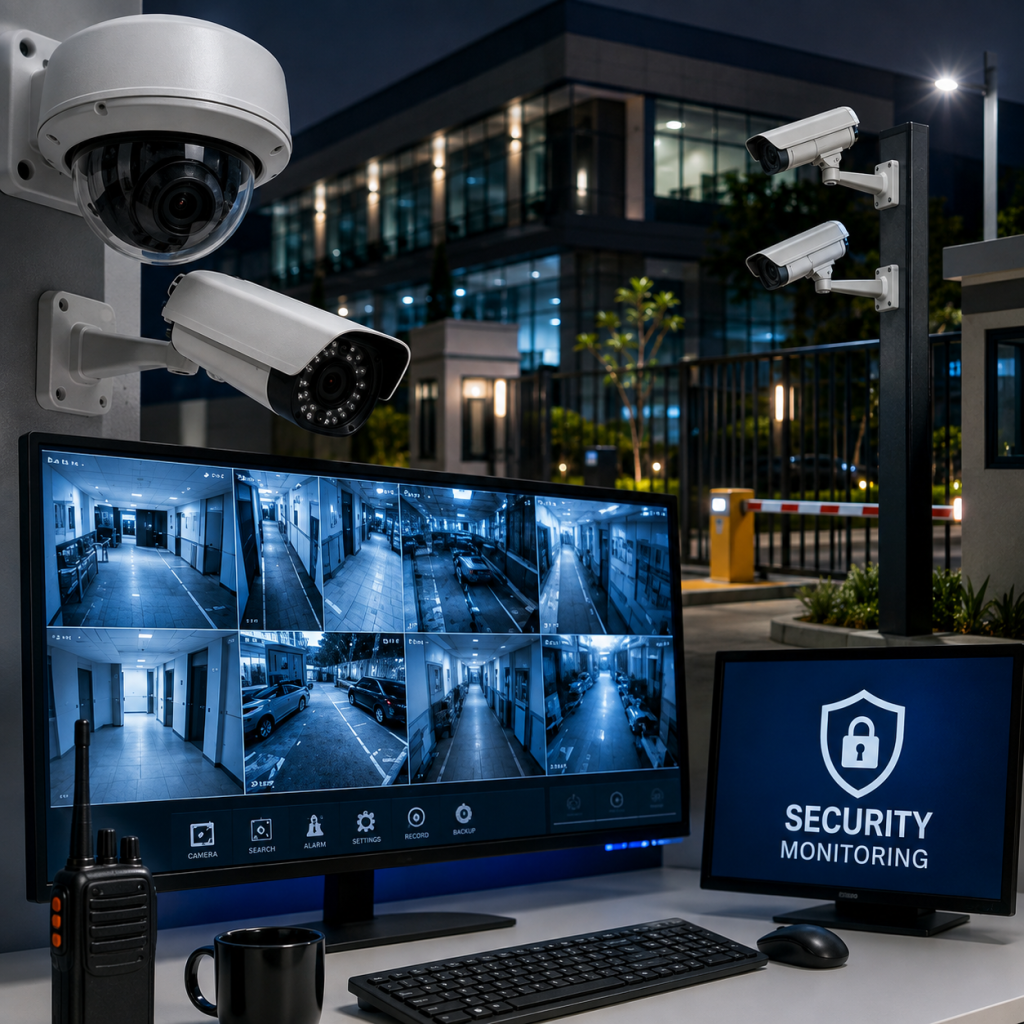
Part-Time Security & CCTV Monitoring Jobs in Nigeria 2026
Introduction to the Modern Security Hustle in Nigeria
Anyone living in Nigeria right now understands that the economic reality has shifted. Having a single source of income is no longer the standard; it is merely a starting point. Whether you are a student trying to fund your education, a fresh graduate waiting for that dream corporate job, or simply someone looking to add an extra layer of financial security to your monthly budget, the side hustle culture is booming. But while many people are looking towards ride-hailing or freelance writing, there is a massive, somewhat hidden industry that is actively hiring: the private security and surveillance sector. Specifically, part-time security and CCTV monitoring jobs are becoming some of the most sought-after gigs in Nigeria in 2026.
If you think about security jobs and immediately picture an elderly man sitting at a gate under the scorching sun, you are heavily outdated. The Nigerian security landscape has undergone a massive technological transformation. With the rapid expansion of real estate, the proliferation of shopping malls, the rise of gated tech-estates in places like Lekki, and the increasing need for corporate asset protection, physical guarding is being augmented—and sometimes replaced—by electronic surveillance.
Because crime and security threats are a 24-hour concern, these control rooms cannot be left unattended for a single second. This creates an enormous demand for shift workers. Companies do not just want full-time staff who might burn out after a 12-hour shift; they actively seek part-time operators to cover weekends, night shifts, and holiday rosters. If you have a sharp eye, a reliable work ethic, and basic computer literacy, stepping into a part-time CCTV monitoring role could be the most practical career move you make this year.


The Evolution of Security in Nigeria: From “Maiguard” to Control Rooms
To truly understand why part-time CCTV monitoring jobs are so abundant in 2026, you have to look at how security has evolved in Nigeria over the last decade.
Ten years ago, the default security measure for a business in Lagos or Abuja was simply to hire more physical guards. However, as businesses grew, they realized that human beings have limitations. A guard cannot be in five places at once, a guard can be compromised, and human error is inevitable when fatigue sets in. This led to a massive importation and installation of Closed-Circuit Television (CCTV) systems across the country.
Today, almost every functional business—from the large commercial banks in Victoria Island to the neighborhood supermarkets in Ikeja and the expansive residential estates in Abuja—has a network of cameras. But here is the catch: a camera is only as good as the person watching it. Recording a crime is good for police investigations after the fact, but actively monitoring a camera prevents the crime from happening in the first place.
This realization birthed the modern security control room. These are air-conditioned, access-controlled rooms filled with multiple monitors displaying live feeds from dozens, sometimes hundreds, of cameras. The people sitting in front of these screens are the true first line of defense. This shift from physical enforcement to digital monitoring has opened up the security industry to a completely different demographic. You no longer need to be heavily built or possess martial arts skills to be a security officer. You just need to be observant, tech-savvy, and highly alert.
What Exactly Does a Part-Time CCTV Monitoring Job Entail?
When you tell your friends you got a job in security, they might assume you are standing by a door checking receipts. A CCTV monitoring job is a completely different ballgame. It is an indoor, desk-based role that requires intense mental focus rather than physical stamina.
A Day in the Life of an Operator
Imagine walking into your shift. Your workspace is a quiet room with a console of screens. Your first task is the handover brief from the outgoing operator. They will tell you if camera 4 in the basement is glitching, or if a suspicious vehicle has been circling the perimeter. Once you take over, your eyes become the primary defense mechanism for the entire building.
Your core responsibilities will usually include the following:
- Active Surveillance: You are not just staring blankly at screens. You are actively scanning for anomalies. Is someone loitering near the restricted server room? Is a shopper spending too much time in a blind spot at the supermarket? You are trained to spot behaviors that deviate from the norm.
- Incident Logging and Reporting: Every time something unusual happens, even if it doesn’t result in a crime, you have to log it. Documentation is a massive part of this job. If a fight breaks out in the parking lot, you log the time, the individuals involved, and the camera angles that captured it.
- Radio Communication: You are the eyes of the physical guards on the ground. You will wear a headset or use a walkie-talkie to communicate with patrol teams. For example, you might say, “Team Alpha, please check the loading bay, we have an unauthorized delivery truck attempting entry.”
- Access Control Management: In many modern Nigerian corporate buildings, the CCTV operator also handles remote access. If a visitor presses the intercom at the front gate, the video feed pops up on your screen. You verify their identity, check their appointment status, and press a button to open the electronic gates.
- Equipment Troubleshooting: While you are not expected to be a full-time technician, part of your job is knowing when a camera goes offline or when the Video Management Software (VMS) needs a restart. You are responsible for immediately reporting technical faults to the IT department.
The Shift Structure
The beauty of this job for a part-timer is the shift flexibility. Security operates 24/7, 365 days a year. Typical shifts are broken down into 8-hour or 12-hour blocks. As a part-time worker, you might be hired specifically for the “graveyard shift” (e.g., 10:00 PM to 6:00 AM) on weekends, or perhaps you cover the afternoon shifts when the full-time staff have their days off. This makes it incredibly easy to balance this job with university classes or a separate 9-to-5 job.
Essential Skills and Qualifications Needed in 2026
Gone are the days when anyone off the street could be thrown into a security role with zero training. Because CCTV operators handle sensitive data and expensive technology, employers in Nigeria have specific requirements in 2026.
Educational Background
For a part-time entry-level CCTV monitoring role, the minimum educational requirement is usually a Senior Secondary Certificate Examination (SSCE) or a National Diploma (ND). However, many employers actively prefer candidates with a Higher National Diploma (HND) or a Bachelor’s degree (BSc), especially for corporate environments like banks or multinational companies. If you are an undergraduate, your student status is often acceptable for part-time weekend roles, provided you can prove your availability.
Technical Proficiency
You cannot be computer illiterate and expect to thrive in this role. You must be comfortable navigating software interfaces. Most control rooms in Nigeria use VMS platforms like Milestone, HikCentral, or Dahua SmartPSS. While they will train you on their specific system, you need to have a natural intuition for computers. Knowing how to operate Pan-Tilt-Zoom (PTZ) cameras using a joystick or a mouse, knowing how to rewind and extract footage onto a flash drive, and understanding basic troubleshooting are massive advantages.
Hyper-Focus and Attention to Detail
This is arguably the most critical soft skill. Watching multiple screens for hours can be incredibly monotonous. The human brain naturally wants to zone out. A top-tier CCTV operator has the discipline to remain engaged. You need the ability to spot a shoplifter slipping a tiny item into their pocket on a grainy screen among fifty other moving customers. This requires patience and an eagle eye.
Excellent Communication Skills
When an emergency happens, panic is a natural reaction. As the person in the control room, you cannot afford to panic. You must be able to relay clear, concise, and accurate information to the guards on the ground or to the Nigerian Police Force over the radio. Stammering or giving vague descriptions like “a guy in a shirt” won’t cut it. You need to be able to say, “Suspect is a male, approximately 6 feet tall, wearing a red polo shirt and blue jeans, currently heading towards the west exit.”
Integrity and Discretion
In this job, you will see things. You will see company executives arriving late; you might accidentally see confidential documents left on a desk through a zoomed-in camera; you will see employee disputes. Total confidentiality is non-negotiable. Leaking CCTV footage to social media or blogs is not just a sackable offense in Nigeria—it can land you in serious legal trouble under the Nigerian Data Protection Regulation (NDPR) laws.
Top Cities in Nigeria Hiring for CCTV Monitoring Roles
While the demand for security is nationwide, certain urban centers in Nigeria have a disproportionately high number of vacancies for CCTV operators due to their commercial density.
Lagos: The Commercial Epicenter
Unsurprisingly, Lagos is the biggest market for this job. Areas like Victoria Island, Lekki, Ikoyi, and Ikeja are packed with corporate headquarters, massive shopping malls like the Palms and Ikeja City Mall, and high-end residential estates. Because the city never really sleeps, the demand for night-shift and weekend part-time operators is astronomical. Retail loss prevention is also a huge sector here, with supermarkets constantly hiring people to monitor shoppers.
Abuja: The Seat of Power
The vibe in Abuja is slightly different. The demand here is driven by government parastatals, diplomatic missions, NGOs, and ultra-luxury residential zones in Asokoro, Maitama, and Wuse. CCTV jobs in Abuja often require a slightly higher level of professional decorum and sometimes require thorough background checks, especially if you are working near diplomatic zones or top-tier government contractor offices.
Port Harcourt: The Industrial Hub
In Port Harcourt, the focus shifts heavily towards industrial security. Oil and gas servicing companies, manufacturing plants, and heavy machinery yards require 24/7 surveillance to prevent the theft of expensive industrial materials. The pay here can sometimes be higher due to the hazard and high-value nature of the assets being protected.
Emerging Hubs: Ibadan, Kano, and Enugu
As businesses expand outward from Lagos to avoid high operational costs, cities like Ibadan are seeing a surge in retail and real estate development. With this expansion comes the need for modern security setups. If you live in these cities, do not assume you have to move to Lagos to find a CCTV monitoring gig. Local malls and large hotels in these areas are actively hiring.
Salary Expectations: How Much Can You Actually Make?
Let’s talk about the money. In Nigeria, salary structures for security roles can vary wildly depending on who is signing your paycheck. Are you working for a massive multinational, or are you working for a local supermarket owner? Here is a realistic breakdown of what to expect in 2026.
For a part-time entry-level CCTV operator, the monthly take-home pay generally ranges from ₦40,000 to ₦80,000. This usually covers working 2 to 3 shifts a week, often on weekends or nights.
If you have some experience, or if you secure a part-time gig at a top-tier facility (like a major commercial bank or a multinational oil firm), that figure can easily push towards ₦100,000 to ₦150,000 a month.
Here are the factors that heavily influence your pay:
- Direct Hire vs. Outsourcing: If you are employed directly by the company (e.g., an in-house hotel security team), the pay and benefits are usually better. However, most companies use security outsourcing firms. The firm charges the client a premium but pays you a standard salary.
- Shift Allowances: Many employers offer extra hazard or night-shift allowances. If you strictly take the 12 AM to 8 AM shifts, you can often negotiate a higher hourly or daily rate.
- Location: A part-time operator in a Lekki Phase 1 estate will naturally earn more than one monitoring a warehouse in the outskirts of Ogun State.
Besides the base salary, many of these roles come with subtle perks. Some companies provide free meals during shifts, HMO (health insurance) coverage even for part-timers, and transportation allowances—a massive relief given the cost of fuel in Nigeria today.
Top Companies and Agencies Hiring in Nigeria
When searching for these jobs, you need to know who the major players are. You can either apply directly to businesses or go through the massive private security companies that deploy operators across the country.
The Heavyweights in Private Security
There are several elite security firms in Nigeria that are constantly recruiting. They maintain a massive pool of trained personnel and deploy them to banks, estates, and corporate offices.
- Halogen Group: Arguably one of the most recognized names in Nigerian security. They have evolved heavily into electronic and cyber security. They regularly hire Control Room Operators and Security Operatives across the country, providing excellent training.
- Kings Guards Nigeria: Another massive player with a strong presence in the banking and corporate sectors.
- Proton Security Services: Known for deploying highly trained personnel, they frequently look for tech-savvy operators to handle their electronic security divisions.
- Arksego Nigeria Limited: A veteran in the industry, heavily involved in both maritime and corporate security.
Direct Corporate Hiring
Not all jobs go through agencies. Keep a close eye on:
- Retail Chains: Miniso, Shoprite, and large local supermarkets (like Prince Ebeano) regularly hire “Loss Prevention Officers,” a fancy term for CCTV operators who catch shoplifters.
- Hospitality: 4-star and 5-star hotels need discrete monitoring to ensure the safety of their high-profile guests without being intrusive.
- Universities and Private Schools: With the increasing need for campus security, many private universities hire students or part-time staff to monitor dormitories and campus perimeters.
The Pros and Cons of the Job
Before you jump headfirst into this industry, it is important to weigh the realities of the job. It is not all glamorous movie-style surveillance.
The Advantages
1. Physical Comfort: Let’s be honest. In a country where the sun can be unforgiving, sitting in a fully air-conditioned room is a massive perk. You are shielded from the elements, making it much less physically exhausting than traditional guard work.
2. Incredible Flexibility: Because it is shift-based, it is the perfect side hustle. You can easily schedule your shifts around your primary job, your business, or your university lectures.
3. A Gateway into IT and Cyber Security: Many people use CCTV monitoring as a stepping stone. Once you understand physical network security, IP cameras, and VMS, it is a very natural progression to transition into IT administration, network engineering, or even cybersecurity roles.
4. Low Barrier to Entry: You don’t need a specialized degree to get started. With a good head on your shoulders, basic computer literacy, and a clean criminal record, you can land a job within weeks.
The Disadvantages
1. Severe Monotony and Boredom: Make no mistake, 95% of this job is watching nothing happen. Staring at an empty hallway for six hours straight can be mind-numbingly boring. You have to fight the urge to fall asleep or play on your phone.
2. Eye Strain and Headaches: Staring at glowing monitors in a dark room for hours on end takes a toll on your eyes. You will need to invest in blue-light blocking glasses and practice the 20-20-20 rule (looking at something 20 feet away for 20 seconds every 20 minutes) to protect your vision.
3. High Pressure During Incidents: When that 5% of action does happen—like a break-in or a fire—the pressure is entirely on you. If you miss the incident because you were distracted, or if you fail to dispatch the guards in time, the financial losses can be blamed on your negligence.
Navigating the Nigerian Factor: Power and Internet Issues
We cannot discuss a tech-reliant job in Nigeria without mentioning the infrastructure. A CCTV control room is only functional if there is power and internet. What happens when the national grid collapses or the estate generator is being serviced?
As an operator, part of your job is managing these transitions smoothly. Most control rooms are equipped with heavy-duty inverters and UPS (Uninterruptible Power Supply) systems. You must be trained to ensure that during the 30-second gap between NEPA taking the light and the generator kicking in, the VMS software does not crash and the camera feeds are instantly restored. Furthermore, many modern IP cameras rely on cloud backups. Monitoring the internet latency and reporting network drops to the ISP (Internet Service Provider) is a crucial part of the daily hustle in this role.
Step-by-Step Guide to Securing a Part-Time CCTV Job Today
If you are convinced that this is the right side hustle for you, how do you actually get hired in the competitive 2026 job market? Here is a practical roadmap.
Step 1: Revamp Your CV
Your CV needs to highlight reliability, tech-savviness, and observation skills. If you have any background in IT, even if it is just a basic computer appreciation diploma, put it at the top. Highlight soft skills like “Crisis Management,” “Attention to Detail,” and “Report Writing.” If you have previous customer service experience, frame it around communication and conflict resolution.
Step 2: Get a Basic Certification (Optional but Recommended)
While you can get hired with just an SSCE or BSc, having a certificate makes you stand out immediately. Look for short online courses on platforms like Coursera or Udemy on “Basic CCTV Operations” or “Introduction to Physical Security.” It shows employers you are serious about the field.
Step 3: Know Where to Look
Do not just walk from office to office dropping CVs; the security industry has moved online. Utilize major Nigerian job portals. Set up keyword alerts for “Control Room Operator,” “CCTV Monitor,” “Surveillance Officer,” and “Loss Prevention.”
Step 4: Nail the Interview
When you get called for an interview, dress professionally. They are evaluating your discipline. Expect situational questions like, “What would you do if you saw a senior manager stealing company property on the camera?” The only correct answer is to follow standard operating procedure—log the incident and report it strictly to your direct supervisor or the Chief Security Officer. They want to know you will not be compromised by hierarchy or sentiment.
Future Trends: Where is the Industry Heading?
The security landscape in Nigeria is not static. As we move deeper into the late 2020s, Artificial Intelligence is beginning to play a massive role. We are already seeing the introduction of facial recognition cameras in high-end estates in Lagos and automated license plate readers (ALPR).
Does this mean human operators will lose their jobs? Absolutely not. AI is prone to false alarms. A stray dog might trigger a motion sensor, or a shadow might trigger a perimeter alert. The human operator is needed more than ever to verify these AI alerts and make judgment calls. However, it does mean that future operators will need to be comfortable working alongside AI software, making the job even more tech-centric.
Furthermore, remote monitoring is becoming a reality. Some companies are experimenting with allowing trusted, senior operators to monitor camera feeds securely from their homes, turning this into a potential remote work opportunity in the future.
Ready to Start Your Security Career?
Taking the leap into the security sector is a brilliant move for anyone looking to secure a stable, flexible part-time income in Nigeria. The jobs are out there, the demand is growing every single day, and the transition from physical guarding to digital surveillance has made this an accessible and respectable hustle.
If you are ready to update your CV and start applying for these roles immediately, the best place to begin your search is on platforms that aggregate verified security vacancies across the country. Stop waiting for the perfect job to fall into your lap and start taking control of your financial future.
Get Started Here: Jobberman Nigeria Security Jobs Portal
Final Thoughts
The part-time security and CCTV monitoring job market in Nigeria is a hidden gem for the observant and the disciplined. It offers a unique blend of technical exposure, physical comfort, and flexible scheduling that very few side hustles can match. Whether you use it as a temporary bridge to pay your way through school, or as the foundation for a long-term career in physical and cyber security, the opportunities are vast. Polish your resume, sharpen your tech skills, and step confidently into the control room.