
Public Health Specialist Jobs Across Africa 2026: WHO, UNICEF & NGO Roles

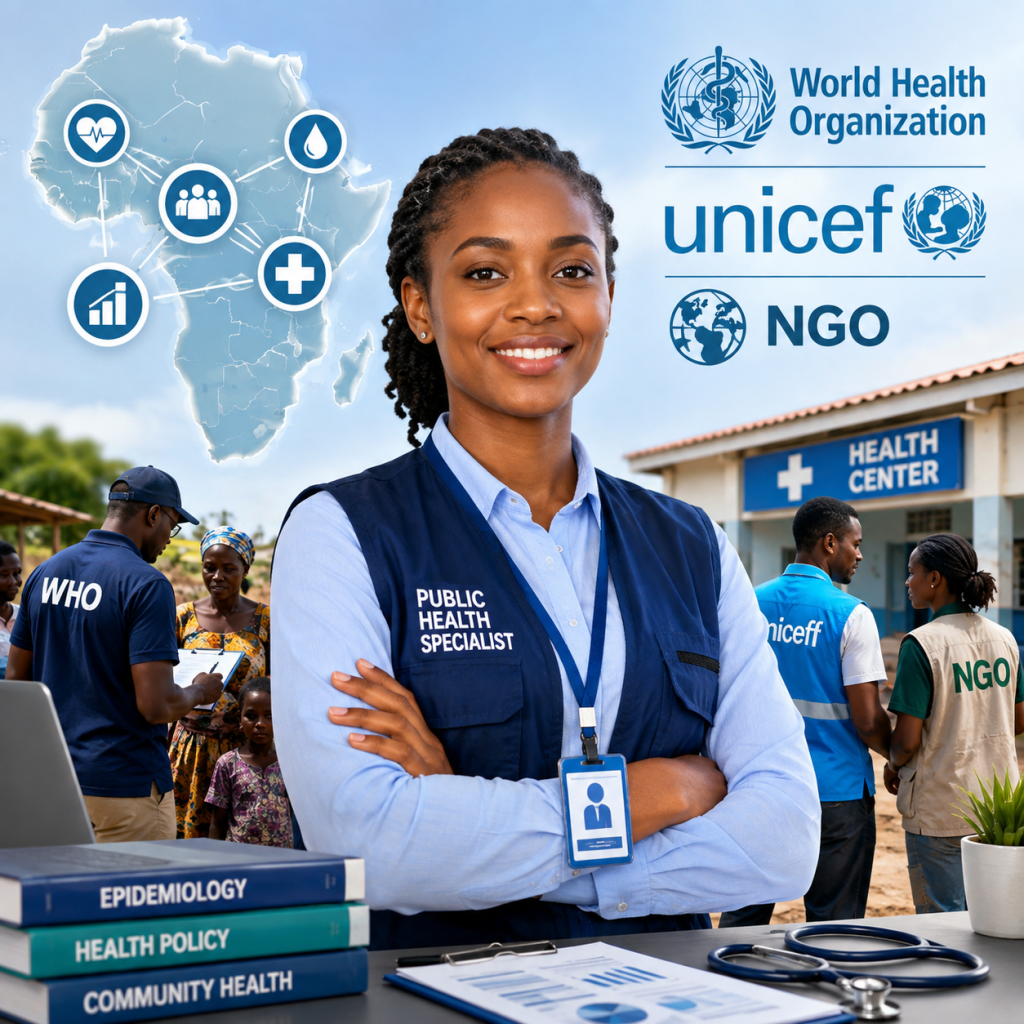
Public Health Specialist Jobs Across Africa 2026: WHO, UNICEF & NGO Roles
The public health sector across Africa is undergoing a profound transformation. As health systems adapt to climate change impacts, emerging infectious diseases, and expanding population needs, international organizations and non-governmental entities are dramatically reshaping their workforce strategies. For medical doctors, epidemiologists, health economists, and programmatic experts, 2026 represents one of the most dynamic job markets in recent history. The World Health Organization (WHO), the United Nations Children’s Fund (UNICEF), and leading international non-governmental organizations (INGOs) are actively recruiting specialists who can combine technical rigor with deep local context.
Securing a public health specialist role within these global bodies requires far more than an impressive academic degree. Candidates must understand the operational shifts inside agencies, how post-pandemic disease surveillance operates, how global donors allocate resources, and how to navigate complex recruitment platforms like UN Inspira or agency talent pools. This detailed guide walks you through the 2026 hiring landscape across Sub-Saharan Africa, covering key roles, regional recruitment hubs, salary structures, essential qualifications, and insider strategies to land your next position.
Key Factors Shaping Public Health Careers in Africa
To position yourself effectively for public health jobs, you first need to understand the strategic priorities driving institutional recruitment across the continent. Funding allocations and job descriptions look quite different today compared to five years ago. Organizations are prioritizing resilience, digital integration, and sustainable local capacity.




1. Localization and National Capacity Building
International agencies are moving away from heavy reliance on short-term expatriate consultants. Under updated strategic frameworks, organizations like WHO AFRO and UNICEF regional offices are directing capital toward recruiting National Professional Officers (NPOs) and regional specialists who understand local governance, cultural nuances, and community dynamics. While international positions (P-level roles) remain vital for cross-border emergency response and regional coordination, the demand for high-level national experts who can work directly with Ministries of Health has surged.
2. The Intersection of Climate Change and Health
Extreme weather events, prolonged droughts in the Horn of Africa, and severe flooding in West and Central Africa have altered disease transmission patterns. Vector-borne diseases like malaria and dengue, along with waterborne infections such as cholera, are expanding into non-traditional geographic zones. Consequently, job postings for Climate and Health Specialists, Planetary Health Advisors, and Disaster Risk Reduction Officers have jumped significantly. Organizations want professionals who can design climate-resilient primary healthcare systems.
3. Disease Surveillance and Outbreak Readiness
Following recent regional outbreaks of Mpox, Marburg virus, Ebola, and vaccine-derived poliovirus, emergency preparedness is no longer treated as a temporary side project. It is now embedded directly into routine health system programming. WHO and Africa CDC are collaborating to establish regional surveillance nodes. Employers actively seek public health specialists who can analyze real-time data, manage field epidemiology teams, and coordinate rapid response mechanisms without waiting for external technical direction.
4. Health System Strengthening (HSS) and Universal Health Coverage
Vertical programs that focus solely on a single disease are being integrated into broader health system frameworks. Donors like Gavi, the Global Fund, and the European Union are funding comprehensive programs aimed at strengthening Primary Health Care (PHC). Current recruitment campaigns heavily favor experts who understand public financial management, health supply chains, workforce development, and health governance.
Where the Jobs Are: WHO, UNICEF, and Top INGOs
Understanding the internal structure and operational focus of major employers helps you target your applications effectively. Each entity operates with a distinct mandate, organizational culture, and recruitment process.
World Health Organization (WHO)
As the directing and coordinating authority on international health within the United Nations system, WHO operates across Africa primarily through the Regional Office for Africa (WHO AFRO) headquartered in Brazzaville, Republic of Congo, along with country offices in almost every African nation. WHO positions focus heavily on technical advisory services, policy formulation, disease surveillance, and national health planning.
Common Entry Points:
- National Professional Officers (NO-A through NO-D): Positioned within country offices to support Ministry of Health counterparts. Candidates must be nationals of the host country.
- International Professionals (P-1 through P-5): Deployed regionally or globally to lead technical clusters, coordinate multi-country emergency responses, or direct technical divisions.
- Special Service Agreements (SSA) and Consultants: Technical contracts designed for rapid deployment during health emergencies or specific short-term policy drafting projects.
United Nations Children’s Fund (UNICEF)
UNICEF places child survival, maternal welfare, nutrition, and development at the center of its health strategy. Operating through the Eastern and Southern Africa Regional Office (ESARO in Nairobi) and the West and Central Africa Regional Office (WCARO in Dakar), UNICEF runs extensive health programs in both stable development settings and humanitarian crisis zones.
Primary Focus Areas for Public Health Specialists at UNICEF:
- Maternal, Newborn, Child, and Adolescent Health (MNCAH): Implementing evidence-based interventions to drop preventable maternal and child mortality rates.
- Immunization and Vaccine Development: Coordinating complex routines and supplementary immunization activities, particularly in high-risk zones.
- Water, Sanitation, and Hygiene (WASH): Linking environmental engineering with public health outcomes to eliminate open defecation and curb cholera epidemics.
- Child Nutrition and Severe Acute Malnutrition (SAM): Managing therapeutic feeding programs and integrating nutrition monitoring into primary health services.
Leading International Non-Governmental Organizations (INGOs)
While UN agencies often work directly with governments at policy levels, INGOs operate extensively on the front lines of direct service delivery, community engagement, and rapid crisis management. Key employers across Africa include:
- Doctors Without Borders / Médecins Sans Frontières (MSF): Renowned for immediate emergency medical responses, field epidemiology, and outbreak containment in high-conflict or disaster areas.
- FHI 360: Focuses on integrated health solutions, HIV/AIDS prevention, reproductive health, and health system governance across East, West, and Southern Africa.
- Clinton Health Access Initiative (CHAI): Targets structural market failures, health financing, market dynamics for essential medicines, and complex health system transformation.
- Catholic Relief Services (CRS): Executes large-scale USAID and Global Fund grants targeting malaria control, health infrastructure, and community health worker networks.
- International Rescue Committee (IRC): Specializes in primary care, maternal health, and psychosocial support in fragile, conflict-affected regions like Somalia, South Sudan, and eastern DRC.
- Humanity & Inclusion (HI): Emphasizes inclusive health services, mental health, psychosocial support (MHPSS), and rehabilitation within mainstream public health frameworks.
High-Demand Public Health Roles and Key Responsibilities
Public health is a broad field, but employer demand in 2026 concentrates heavily on specialized disciplines. Below is a detailed look at the roles most frequently recruited across Africa.
1. Epidemiologist / Disease Surveillance Specialist
Core Mission: Track disease trends, detect early signals of potential outbreaks, conduct field investigations, and build national epidemiological reporting capacity.
Key Responsibilities:
- Design and manage integrated disease surveillance and response (IDSR) systems using digital tools like DHIS2.
- Lead field investigations during suspected disease outbreaks (e.g., cholera, viral hemorrhagic fevers, measles).
- Analyze complex epidemiological datasets to inform immediate clinical and policy interventions.
- Train national and district health officers on outbreak detection and standardized reporting protocols.
2. Health Systems Strengthening (HSS) Specialist
Core Mission: Diagnose structural bottlenecks within public health systems and rebuild infrastructure, governance, and resource allocation mechanisms.
Key Responsibilities:
- Provide strategic technical advice to state and national authorities on Universal Health Coverage roadmaps.
- Conduct public financial management assessments to ensure health sector funds are allocated efficiently.
- Support decentralized health governance by training district health management teams.
- Integrate primary healthcare packages across public, private, and faith-based health providers.
3. Maternal, Newborn, and Child Health (MNCH) Manager
Core Mission: Reduce preventable maternal, neonatal, and under-five mortality rates through scalable healthcare packages.
Key Responsibilities:
- Oversee the rollout of emergency obstetric and newborn care services across rural clinic networks.
- Implement community-based healthcare strategies targeting pregnant women and young infants.
- Collaborate with supply chain specialists to prevent stockouts of life-saving reproductive health commodities.
- Monitor key performance indicators related to antenatal care visits, institutional delivery rates, and postnatal care.
4. Climate & Planetary Health Specialist
Core Mission: Mitigate health risks associated with environmental degradation, shifting regional temperatures, and weather shocks.
Key Responsibilities:
- Conduct climate-health vulnerability and adaptation assessments for vulnerable populations.
- Develop early warning systems that link meteorological forecasts with vector-borne disease modeling.
- Secure green funding mechanisms to upgrade local health infrastructure to solar power and water-resilient systems.
- Draft national policies that align public health priorities with national climate adaptation strategies.
5. Immunization and Cold Chain Officer
Core Mission: Maintain high vaccination coverage rates and protect the structural integrity of temperature-sensitive vaccines from production to final administration.
Key Responsibilities:
- Manage country-wide supplementary immunization activities targeting vaccine-preventable diseases.
- Assess, repair, and modernize cold chain storage technology, including solar-powered direct-drive refrigerators.
- Map underserved populations, nomadic communities, and urban informal settlements to reduce zero-dose child statistics.
- Strengthen post-vaccination safety reporting and surveillance for adverse events following immunization (AEFI).
Regional Recruitment Hotspots Across Africa
Public health jobs are distributed across the continent, but recruitment activity naturally clusters around administrative centers, humanitarian hubs, and field operational bases.
East Africa: Strategy, Policy, and Regional Hubs
Key Cities: Nairobi (Kenya), Addis Ababa (Ethiopia), Kampala (Uganda), Dar es Salaam (Tanzania)
Nairobi serves as the primary regional headquarters for most UN agencies and international NGOs operating across East Africa. It is a major center for high-level technical positions, regional project management, and health financing roles. Addis Ababa, as the host city of the African Union and the headquarters of the Africa Centres for Disease Control and Prevention (Africa CDC), offers significant opportunities for professionals focused on continental health policy, diplomacy, and cross-border disease control strategies.
West and Central Africa: Humanitarian Response and Health Systems Resilience
Key Cities: Dakar (Senegal), Abuja & Kano (Nigeria), Kinshasa (DRC), Maiduguri (Nigeria)
Dakar acts as the strategic and diplomatic nerve center for West Africa, housing regional headquarters for WHO, UNICEF, and major donor projects. Nigeria remains one of the largest recruitment markets on the continent due to its population size and complex mix of development and humanitarian needs. Key operational nodes include Abuja (for health governance, health economics, and national policy management) and Kano or Maiduguri (for field epidemiology, polio eradication programs, WASH, and emergency humanitarian relief). Meanwhile, Kinshasa and eastern DRC host extensive deployments focused on hemorrhagic fever management, cholera response, and complex emergency care.
Southern Africa: Health System Innovation and Non-Communicable Diseases
Key Cities: Pretoria & Johannesburg (South Africa), Maputo (Mozambique), Lilongwe (Malawi)
Southern Africa leads in programs targeting HIV/TB integration, health system economics, and the rising burden of non-communicable diseases (NCDs) alongside traditional infectious disease risks. Pretoria and Johannesburg serve as key research and technical support bases, while Mozambique and Malawi host major programs dedicated to climate adaptation, maternal survival, and infectious disease containment.
Compensation, Grade Levels, and Benefits Breakdown
Understanding UN and INGO pay scales helps you gauge where you fit within an organization and evaluate compensation packages accurately during recruitment.
UN Salary Grade System
The United Nations system utilizes a standardized grading structure across all agencies, including WHO and UNICEF:
- National Officer (NO) Grades (NO-A to NO-D): Locally recruited professionals holding a university degree. Salaries are set in local currency based on the top tier of local labor markets, adjusted regularly to buffer against domestic inflation.
- Professional (P) Grades (P-1 to P-5): Internationally recruited staff positions. Salaries are set on a global scale in US Dollars, augmented by a geographic Post Adjustment factor that compensates for the cost of living and inflation at specific duty stations.
- Senior Director Grades (D-1 to D-2): Top executive leadership managing country offices or global technical divisions.
UN and INGO Compensation Framework 2026
| Grade / Category | Typical Experience Required | Primary Focus & Roles | Estimated Annual Base Compensation Bracket |
|---|---|---|---|
| National Officer (NO-A / NO-B) | 1 to 5 years | Junior to mid-level technical support, local field monitoring, data analysis within host country. | $25,000 – $45,000 USD equivalent (Paid locally) |
| National Officer (NO-C / NO-D) | 5 to 10+ years | Senior national technical advisor, program manager, direct liaison with MoH units. | $45,000 – $75,000 USD equivalent (Paid locally) |
| International Professional (P-2 / P-3) | 2 to 5+ years | Field epidemiologist, technical officer, regional program specialist, emergency responder. | $70,000 – $105,000 USD (Base + Post Adjustment varies by location) |
| International Professional (P-4 / P-5) | 7 to 10+ years | Senior Public Health Specialist, Chief of Health, Team Leader, Regional Cluster Coordinator. | $110,000 – $160,000+ USD (Base + Post Adjustment) |
| INGO Senior Manager / Technical Advisor | 5 to 8+ years | Chief of Party, Country Director, Senior Health Systems Director. | $60,000 – $120,000 USD (Varies by organization size) |
Standard UN/INGO Benefits Package:
For international recruits, compensation goes well beyond base pay. Packages typically include:
- Post Adjustment: A variable percentage added to base salary depending on the duty station’s cost of living.
- Hardship Allowance: Additional monthly compensation paid when deployed to locations with difficult living conditions or limited infrastructure.
- Danger Pay: Extra allowance provided for non-family hardship duty stations exposed to active security risks.
- Education Grant: Financial coverage for dependent children’s schooling expenses.
- Rental Subsidy: Partial reimbursement for private housing costs at official duty stations.
- Comprehensive Medical Coverage: Global health insurance covering the employee and direct dependents.
Essential Qualifications, Skills, and Certifications
Landing a job as a public health specialist requires a deliberate combination of academic credentials, practical technical proficiencies, and interpersonal skills.
1. Academic Foundations
An advanced degree is almost universally required for mid-to-senior level roles:
- Master of Public Health (MPH): The standard qualification across international recruitment panels.
- Master of Science (MSc) in Epidemiology / Biostatistics: Highly preferred for surveillance, outbreak response, and research positions.
- Medical Degree (MBBS / MD / BChD): Strongly preferred or required for clinical health management, MNCH technical roles, and direct emergency outbreak control.
- Doctor of Public Health (DrPH) or PhD: Valued for senior advisory roles, institutional research positions, and high-level policy advisory jobs at WHO or Africa CDC.
2. Technical and Software Competencies
Public health is increasingly driven by quantitative rigor and real-time spatial analysis. High-performing applicants demonstrate proficiency in:
- Statistical Analysis Software: Advanced command of STATA, R, SPSS, or SAS for analyzing large health survey datasets (such as DHS or MICS).
- Health Information Platforms: Direct experience configuring, managing, or extracting reports from DHIS2 (District Health Information Software 2).
- Geographic Information Systems (GIS): Spatial analysis capabilities using ArcGIS or QGIS to map disease clusters, facility access, and coverage gaps.
- Survey and Digital Data Collection Tools: Hands-on familiarity with KoboToolbox, ODK (Open Data Kit), or CommCare for field data collection.
3. Language Fluency: The Ultimate Career Multiplier
Multi-language capability is one of the quickest ways to stand out in African public health recruitment. An applicant fluent in both English and French immediately doubles their pool of available opportunities across West, Central, and East Africa.
- French: Critical for deployments in Francophone West Africa (Senegal, Mali, Niger, Guinea) and Central Africa (DRC, CAR, Chad).
- Portuguese: High demand and low supply for technical positions in Lusophone nations like Mozambique, Angola, and Guinea-Bissau.
- Arabic: Essential for humanitarian and health operations across Sudan, South Sudan border areas, North Africa, and parts of the Sahel.
How to Win the Recruitment Process: Step-by-Step Strategy
The recruitment process for UN agencies and international NGOs is notoriously rigorous and can take anywhere from three to nine months. Following a structured preparation strategy ensures your application survives automated screeners and competitive interview panels.
Step 1: Optimize Your Profile for Applicant Tracking Systems (ATS)
Both WHO and UNICEF use electronic recruitment platforms (such as UN Inspira and SuccessFactors) that filter profiles using keyword algorithms before a human recruiter ever sees them. To pass through these digital filters:
- Match the exact language used in the job description. If the posting mentions “integrated disease surveillance and response,” use that precise term in your work history rather than generic phrases like “monitored health data.”
- Detail your quantitative impact. Instead of writing “managed vaccination campaign,” write “led a team of 35 field officers executing a polio supplementary immunization activity targeting 120,000 children across 4 districts, achieving 96% coverage.”
- Ensure your academic degrees and employment dates leave zero unaccounted gaps. Automated screeners flag unexplained resume breaks.
Step 2: Master the Competency-Based Interview (CBI)
UN agencies and major INGOs rely heavily on Competency-Based Interviews. Panelists will not ask hypothetical questions like “What would you do during an outbreak?” Instead, they ask for past behavioral evidence: “Describe a time when you had to coordinate an emergency health response under severe resource constraints.”
Structure every interview answer using the STAR Method:
- Situation: Describe the specific background context, location, and operational challenge (keep this to 15% of your answer).
- Task: Define your exact responsibility within that setting (10% of your answer).
- Action: Outline the specific technical and managerial steps YOU took to resolve the challenge. Use “I” instead of “We” to highlight your personal role (60% of your answer).
- Result: Quantify the outcome using numbers, percentages, or strategic policy changes achieved (15% of your answer).
Step 3: Strategic Entry through Consultancies and Rosters
Breaking directly into a permanent P-3 or NO-C position from the outside can be difficult due to sheer applicant volumes. A proven tactical shortcut is joining pre-screened talent rosters or accepting short-term consultancies:
- Emergency Response Rosters: Apply to agency rapid deployment rosters (e.g., WHO Standby Partners or UNICEF Emergency Rosters). Roster members are fast-tracked for temporary deployments during crises, giving you vital field experience.
- Individual Contracts / SSAs: Short-term consultancy assignments (3 to 11 months) allow you to demonstrate technical capability internally, build strong professional networks, and learn institutional systems from the inside.
Long-Term Career Planning for African Health Professionals
If you are transitioning from a national Ministry of Health, local district hospital, or domestic research institute into the international public health domain, intentional career planning makes all the difference.
First, gain real field experience at the district or community level before applying for regional advisory roles. Organizations value specialists who have managed real-world operational challenges in primary health facilities over applicants with purely theoretical or academic backgrounds. Second, build a distinct technical identity. Rather than marketing yourself as a general health practitioner, position yourself as an expert in a specific niche—such as vaccine cold chain logistics, maternal health quality improvement, or epidemic data analytics.
Finally, engage actively with regional professional networks. Participate in continental gatherings like the Conference on Public Health in Africa (CPHIA), contribute to open-access peer-reviewed journals, and build collaborative ties across national borders. Networking within regional health task forces frequently uncovers unadvertised technical vacancies and consultancy opportunities before they hit public job boards.
Get Started: Access Official Career Portals
Ready to start your search and submit applications for active public health roles across Africa? Begin by creating a verified profile on the official global talent portals.
To explore open positions, set up job alerts, and submit applications directly to international health vacancies, visit the Official UN Careers Gateway and begin building your candidate profile today.
Summary
The demand for public health specialists across Africa in 2026 reflects a fundamental shift toward resilient health systems, local technical leadership, and proactive epidemic readiness. Whether your expertise lies in tracking disease vectors, building equitable maternal health programs, or managing primary care financing, opportunities at WHO, UNICEF, and leading INGOs offer rewarding career paths. By aligning your technical skill set with modern priorities, mastering competency-based recruitment, and targeting key geographic hubs, you can build an impactful career dedicated to advancing public health outcomes across the continent.