
Plumber & Pipefitter Jobs in Nigeria 2026: Oil & Gas, Housing & Construction

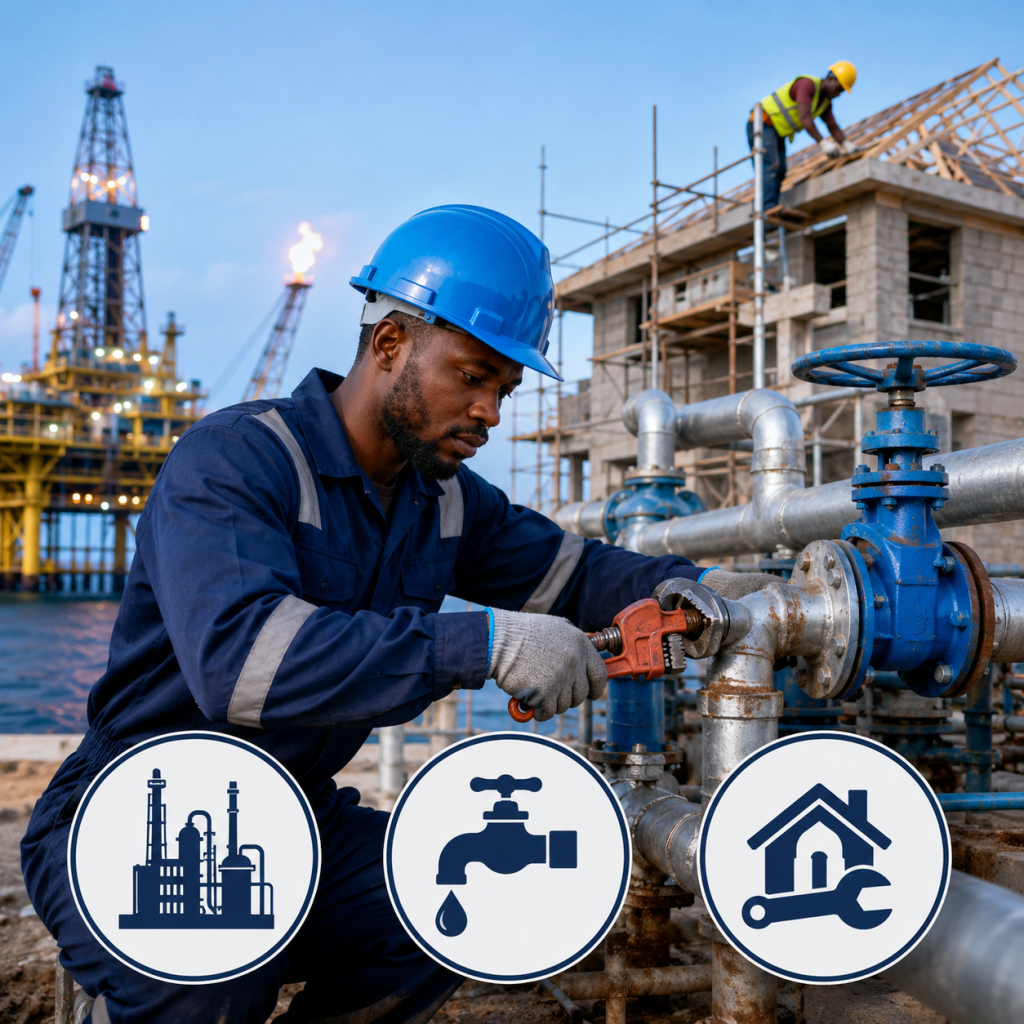
Plumber and Pipefitter Jobs in Nigeria 2026: Oil and Gas, Housing, and Construction
The job market in Nigeria is undergoing a massive transformation. If you walk through the bustling streets of Lagos, visit the industrial hubs in Port Harcourt, or check out massive housing estates springing up around Abuja, you will notice one constant thing: heavy construction is everywhere. Behind every tall skyscraper, every sprawling housing layout, and every complex refinery setup lies a critical trade that keeps the whole system flowing—plumbing and pipefitting.
For a long time, white-collar office jobs took center stage in career discussions across the country. However, economic realities and a massive infrastructure boom have flipped the script. Skilled blue-collar professionals—specifically plumbers and pipefitters—are smiling to the bank. Whether you are an experienced technician looking to switch jobs or a young Nigerian trying to figure out a viable handwork that pays international-grade bills, 2026 presents golden opportunities across three major sectors: Oil and Gas, Housing, and Civil Construction.
Let us take a comprehensive look at how you can secure high-paying plumber and pipefitter jobs in Nigeria, what employers are looking for, expected salaries, and how to position yourself for career growth.
Understanding the Role: Plumber vs. Pipefitter
Before diving deep into the job market, it helps to clear up a common mix-up. While both professions deal with pipes, water, gas, and fluids, their day-to-day operations, environments, and technical requirements differ significantly.




A Plumber generally focuses on systems used for distribution of water for drinking, heating, and cooling, as well as the disposal of waste. Plumbers work extensively in residential, commercial, and light industrial buildings. They install bathroom fixtures, clear blocked drains, fix running toilets, and set up local water storage systems like overhead tanks and surface boreholes.
A Pipefitter, on the other hand, deals with high-pressure, high-stress systems. They operate primarily in heavy industrial settings—think of crude oil refineries, petrochemical plants, power generation stations, and massive manufacturing assembly lines. Pipefitters handle complex layouts involving high-pressure steam, chemicals, acids, and petroleum products. Their job requires rigorous blueprint reading, specialized welding knowledge, and strict adherence to international safety regulations.
Sector 1: Oil and Gas Opportunities
Nigeria’s oil and gas sector remains the highest-paying industry for skilled mechanical trades. Despite transitions toward alternative energy, upstream and downstream activities are booming, driven by local refinery operations, pipeline expansions, and offshore maintenance projects.
Where the Jobs Are Located
If you want to chase big oil and gas money, your gaze needs to be fixed on the Niger Delta region and major commercial hubs. Key locations include:
- Port Harcourt (Rivers State): The traditional capital of oil exploration, hosting numerous multinational servicing firms, flow stations, and terminal maintenance yards.
- Lagos (Lekki and Apapa axis): Home to major downstream refining operations, tank farms, and marine logistics companies.
- Warri and Eket: Critical zones for swamp and offshore pipeline construction and maintenance projects.
Key Responsibilities for Oil and Gas Pipefitters
Working in the petroleum sector is not for novices. Companies hiring pipefitters expect candidates to handle tasks such as:
- Fabricating and installing high-pressure carbon steel and alloy piping systems.
- Reading and executing complex Isometric and Piping & Instrumentation Diagrams (P&IDs).
- Performing rigorous hydrostatic and pneumatic testing to detect leaks before systems go live.
- Complying strictly with Health, Safety, and Environment (HSE) protocols, often requiring offshore survival certifications like BOSIET and HUET.
Sector 2: Housing and Real Estate Boom
Urban migration and a growing middle class have triggered a massive wave of residential and commercial real estate development. From luxury apartments in Victoria Island and Ikoyi to sprawling gated communities in Abuja, Ibadan, and Enugu, real estate developers cannot find enough qualified plumbers.
Emerging Trends in Residential Construction
Modern housing in Nigeria has moved past basic PVC pipe connections. Today’s property developers require advanced skills, creating specialized niches:
- Integrated Water Treatment Plants: Modern luxury estates feature automated water treatment and sewage treatment systems (WTP/STP) requiring specialized plumbing maintenance.
- PEX and Multi-layer Piping: Moving away from traditional galvanized iron pipes that rust easily, modern housing relies heavily on advanced cross-linked polyethylene systems.
- Smart Pressure Systems: Installation of pressure pumps, solar water heaters, and automated booster systems that guarantee steady water flow despite municipal supply challenges.
Sector 3: Civil Construction and Mega Infrastructure
Mega infrastructure projects change the face of a nation. In Nigeria, ongoing road expansions, airport terminal constructions, and industrial park developments require dedicated piping infrastructure.
Construction companies look for site plumbers and utility pipefitters who can work alongside civil engineers and electrical contractors. These roles involve laying underground drainage systems, storm-water management pipelines, and municipal water supply connections that can withstand heavy weight and environmental pressure.
Salary Expectations and Earning Potential
How much do plumbers and pipefitters make in Nigeria? The answer depends heavily on your skill set, certifications, and the industry sector you find yourself in.
For residential general plumbing, entry-level technicians working with local contractors may earn between ₦50,000 to ₦100,000 monthly. However, independent master plumbers running private services or working for high-end facility management firms easily pull in significantly more through contract jobs and maintenance retainers.
In the corporate housing and manufacturing sector, mid-level mechanical fitters and industrial plumbers enjoy structured monthly salaries ranging from ₦200,000 to ₦400,000, often accompanied by health insurance and housing allowances.
At the apex are certified offshore pipefitters and multinational oil and gas specialists. Due to the hazardous nature of the job and the specialized certifications required, earnings can scale from several millions of Naira annually, especially when deployed on offshore rotation schedules.
Essential Requirements to Land High-Paying Jobs
If you want to move away from low-paying roadside jobs and break into corporate or industrial employment, you must upgrade your professional profile. Employers look for distinct markers of competence:
1. Technical Training and Certifications
While practical apprenticeship is valued, having formal credentials sets you apart. Certificates from recognized technical colleges, industrial training funds, or specialized mechanical trade academies give employers confidence in your foundational knowledge.
2. Blueprint Literacy
Can you look at a structural drawing and translate it into physical pipe routing? The ability to interpret technical schematics, floor plans, and isometric drawings is non-negotiable for industrial and large-scale construction roles.
3. Safety Compliance (HSE Standards)
Accidents on industrial sites cost companies millions. Having valid HSE certifications (Level 1, 2, and 3) is mandatory. For oil and gas fields, certifications like Basic Offshore Safety Induction and Emergency Training (BOSIET) are your gateway pass.
4. Tool Proficiency
Modern plumbing and pipefitting go beyond spools and wrenches. Familiarity with automated threading machines, hydraulic bending tools, orbital welding units, and digital leak-detection equipment makes you an asset on any job site.
How to Find and Apply for Plumber & Pipefitter Jobs in Nigeria
Finding legitimate openings requires looking in the right places. Relying solely on word-of-mouth limits your growth. Utilize modern digital recruitment channels:
- Professional Job Portals: Regularly check platforms like LinkedIn, MyJobMag, and Jobberman, using targeted keywords like “Mechanical Fitter,” “Piping Field Engineer,” or “Facility Plumber”.
- Direct Company Portals: Major construction giants (such as Julius Berger, Craneburg, and Dantata & Sawoe) and oil service firms post direct vacancies on their career pages.
- Networking and Trade Associations: Join local artisan guilds and professional bodies. Many high-end contracts are awarded via professional recommendations.
To explore open listings right away, you can check active postings and take the next step in your career journey through the official portal: Sign Up and View Active Pipefitter Vacancies.
Conclusion
The narrative surrounding skilled labor in Nigeria has changed completely. Plumbers and pipefitters are no longer viewed merely as roadside handymen, but as essential engineering specialists driving the nation’s physical infrastructure. Whether you choose the lucrative oil and gas sector, the fast-paced residential real estate market, or heavy civil construction, the opportunities in 20th and 21st-century modern Nigeria are vast.
By investing in your technical training, prioritizing safety standards, and mastering blueprint interpretations, you position yourself at the very top of the hiring chain. Update your CV, secure your safety certifications, and step into a rewarding, high-paying career path today.